
Honey may feel soothing at bedtime, but evidence for better sleep in adults is limited. Its sugars still count toward WHO limits, and blood-glucose response varies by honey type and person.
In a JAMA Pediatrics study, honey given to children with colds 30 minutes before bed eased nighttime cough and improved sleep.
That finding does not establish honey as a sleep aid for adults. A spoonful before bed remains a source of sugar, and its effect on blood glucose depends partly on the honey and the person eating it.
The case for better sleep rests on two theories, not strong evidence that honey helps adults fall asleep. Its sugars may prompt a small rise in insulin, which could help tryptophan enter the brain. The body uses tryptophan to make serotonin, then melatonin. Both are tied to sleep and the body's daily rhythm. A warm, sweet drink may also feel calming as part of a routine.
The World Health Organization recommends keeping free sugars below 10% of daily energy intake; reducing them to under 5%—about 25 grams, or six teaspoons—may provide additional health benefits. Sugars in honey count toward that limit.
A calming ritual is no sedative.
Manuka Clinic has also proposed that honey may help keep the liver's glycogen stores steady overnight. If those stores fall, the body can release cortisol and adrenaline. That shift may wake some people, but the theory has not shown that honey prevents adults from waking at night.
The childhood cough finding is narrower than the sleep claims suggest. Honey appeared to improve sleep because children coughed less, not because it acted as a sleep drug. A separate review describes possible relief from cough and better sleep among children older than one, while noting that evidence is limited. Tuasaude's review does not establish honey as a sleep aid for adults.
Evidence on honey and metabolic measures is mixed. One meta-analysis reported a small reduction in fasting glucose, with low-quality evidence, while an eight-week study in people with type 2 diabetes found a less favorable change in HbA1c with honey consumption.
Blood sugar is the less forgiving part of the story. Honey is rich in carbohydrates, mainly fructose and glucose, and its glycemic index can vary widely. Agroscope tracked 10 healthy adults ages 23 to 39 for 120 minutes after they ate portions with the same amount of digestible carbohydrate: 25 grams. Acacia honey scored about 53, rapeseed honey 64, and some forest honeys as high as 88. Honey with more glucose than fructose tended to score higher.
Natural does not mean blood-sugar neutral. Honey's sugars count as free sugars, and the World Health Organization recommends keeping them below 10% of daily energy. Cutting that share to under 5%, about 25 grams or six teaspoons, may bring added benefits. Amaayu's WHO summary confirms that honey counts toward the limit. The Belgian group diabete.be warns that honey can raise blood glucose and is not a sound sugar substitute for people with diabetes.
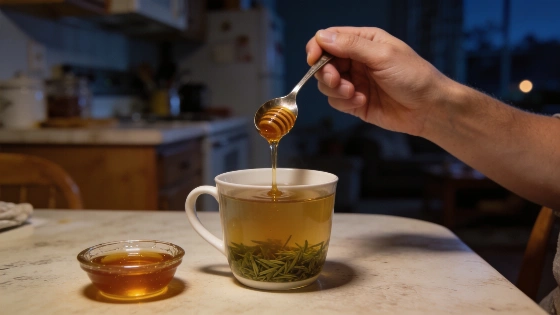
For adults without a known blood-sugar problem, Manuka Clinic and Doctissimo suggest keeping any trial small: about a teaspoon, or 5 to 7 grams, 30 to 60 minutes before bed. Mixing it into warm tea or plain yogurt avoids taking it alone. The Institut national du sommeil et de la vigilance advises against isolated fast sugars at night, honey included, because blood-sugar swings may work against steady sleep. The sleeping environment matters, too: light during sleep has been linked to concerns beyond bedtime habits.
Anyone with diabetes or prediabetes should ask a clinician before adding honey at night. The same advice applies to people with glucose problems or those taking medicines that lower blood sugar. Anyone with a history of nighttime low blood sugar should check with a clinician as well.
The glycemic index ranks carbohydrate-containing foods by their effect on blood glucose, but it cannot predict each person's response. Honey type and portion size both matter. A lower score does not make honey an insomnia treatment. For most adults, a little may suit their taste, but it should still count as sugar when managing blood glucose.
Honey is unsafe for children under 1 year old because of the risk of infant botulism.