
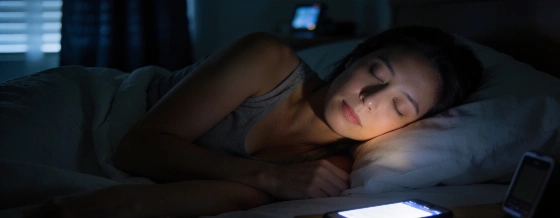
Leaving a nightlight or phone screen glowing while you sleep could be doing more than disrupting your rest—it may be quietly reshaping your heart’s structure and raising your risk for heart failure.
Many people see a glowing phone or hallway light at night as harmless. But new research suggests that even dim light in your bedroom could be quietly affecting your heart—changing its structure in ways that may lead to serious problems later on.
In a study of more than 11,000 adults, scientists found that those exposed to more than 3 lux of light while sleeping—roughly the brightness of a phone screen on your nightstand or a faint hallway lamp—had thicker walls in the heart’s ventricles. This change, called cardiac remodeling, usually happens after years of stress or injury and can lead to heart failure if it continues. According to a Tulane University report, the study, published in the European Heart Journal on September 9, 2026, used data from the UK Biobank and found that even this low level of light was linked to less efficient heart contractions.
"In a separate long-term analysis of over 73,000 people, the highest levels of nighttime light exposure were linked to a 29% higher risk of heart failure and a 33% higher risk of stroke over 8–10 years."
— Medscape
What’s surprising is how little light it takes to make a difference. Participants wore wrist sensors for a week to measure their nighttime light exposure. Some slept in near-total darkness, while others had a faint, steady glow in their rooms. The group with the most exposure didn’t have bright lights—just the kind of ambient light many people consider normal. Reports confirm that 3 lux is about as bright as a weak nightlight or light from a hallway. Those in the brightest group showed both thickened heart walls and weaker pumping function.
The Tulane University researchers behind the study now say that light pollution should be seen as a real risk factor for heart disease. They recommend that doctors ask patients about their sleep environment, not just blood pressure or cholesterol. Darkness, they argue, should be considered as important for heart health as clean air or healthy habits. The study also found a clear pattern: the more light people were exposed to at night, the greater the negative changes in heart structure and function, as shown by follow-up MRI scans years later.
If you have trouble sleeping without some light, these findings might be unsettling. Still, the advice is straightforward: blackout curtains, warm bedside lamps, and covering up small LEDs on electronics can all help. The goal isn’t to turn your bedroom into a bunker, but to give your body the darkness it needs to protect your heart. Study co-author Chandra L. Jackson pointed out that even moderate nighttime light can be a risk factor, and simple steps like reducing screen and indicator lights can help.
The Tulane study measured nighttime light using wrist-worn sensors over a week, then performed cardiac MRI scans years later to assess structural changes. The researchers found a clear dose-response effect: as nighttime light exposure increased, so did the thickening of the heart’s left ventricle and the decline in pumping efficiency.
— Tulane University School of Public Health
These results add to growing evidence that our sleep environment affects both mental and physical health. As reported earlier, even small changes in bedtime routines or comfort cues can have a big impact on sleep quality and how our bodies recover overnight.
What’s new in this study is the direct link between nighttime light and the heart’s physical structure. It’s not just about feeling tired or irritable the next day—chronic exposure may be quietly increasing the risk of heart disease, even in people who think they sleep well. The evidence is strong enough that darkness should be seen as a basic part of a healthy bedroom, not just a preference. For anyone who has ignored the glow of a screen or streetlight, the science now points to a deeper impact—one that’s worth taking seriously for long-term health.
Cardiac remodeling means changes in the size, shape, or function of the heart after stress or injury. While it’s often linked to high blood pressure or heart attacks, environmental factors like light exposure are now recognized as contributors. Addressing these subtle risks may not only improve sleep but also help prevent the slow, silent progression of heart disease. The study found that people with higher nighttime light exposure had a 2.4% greater indexed left ventricular mass, 1.5% thicker average wall, and 1.9% lower myocardial contraction fraction compared to those exposed to less than 3 lux, as detailed in a Medscape summary.