
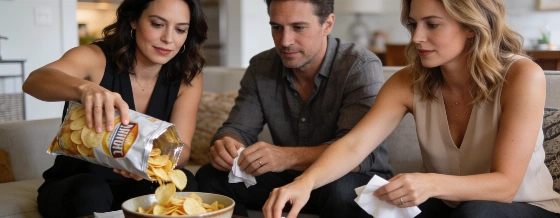
Serving chips straight from the bag at gatherings can create hygiene issues, awkward moments, and social discomfort—experts say the way you share snacks matters more than you think
Picture a casual get-together: drinks on the coffee table, laughter, and a big bag of chips torn open for everyone to grab. It feels normal—until you look closer at what actually happens. Etiquette specialists warn that this common move can quickly turn into a social misstep, especially when hands go from mouth to bag and back again. According to Top Santé, the way we serve and share snacks like chips says a lot about our respect for others at the table.
The problem isn’t the chips themselves. It’s the method. When a bag sits in the center, people instinctively reach in, often with fingers that have just touched their lips. Each pass increases the chance of spreading germs, and the crinkling bag, flying crumbs, and greasy fingers only add to the discomfort. Etiquette schools in the U.S. recommend pouring chips into a bowl and offering a serving utensil—like tongs or a spoon—especially when hosting a larger group. These small steps can make a big difference in how guests feel.
But it’s not just about hygiene. The way people grab snacks can send the wrong message. Etiquette expert María José Gómez describes a move she calls “the excavator”—digging deep into the bag and pulling out a fistful of chips. This gesture not only disrupts the snack for others but also leaves a messy trail and can come across as impatient or inconsiderate. Instead, she suggests taking just one or two chips at a time, minimizing contact with the rest of the food and keeping the experience pleasant for everyone.
There’s also a simple technique to avoid awkwardness: use both hands. Take a chip from the bowl or bag with your non-dominant hand, then transfer it to your dominant hand before eating. This keeps the hand that touches your mouth out of the shared food. And if your fingers get oily, don’t wipe them on your clothes or lick them clean—use a napkin or step away to wash up. Hosts can help by providing plenty of napkins and making it easy for guests to keep their hands clean.
Social codes around food aren’t just about tradition—they shape how comfortable people feel in group settings. As discussed in coverage of bread etiquette at formal dinners, even small serving habits can signal respect or carelessness. The details matter, especially in moments meant to bring people together.
Recent surveys show that nearly 60% of Americans feel uneasy when sharing snacks directly from a communal bag, citing concerns about hygiene and social awkwardness. Etiquette experts note that these discomforts are not just about germs—they reflect deeper anxieties about boundaries and respect in shared spaces. As more people become aware of these subtle signals, hosts are increasingly opting for bowls, utensils, and thoughtful serving arrangements to create a more welcoming atmosphere.
Etiquette is not about rigid rules—it’s about making everyone at the table feel at ease. The way we serve and share food, especially in informal settings, can either build connection or quietly undermine it. Paying attention to these details isn’t just polite; it’s a practical way to support comfort and trust among friends and family.
Serving snacks at gatherings is a small but telling part of social life. The rise of etiquette advice on social media reflects a broader trend: people want clear, practical guidance for everyday situations that can otherwise feel ambiguous. Whether it’s chips, bread, or any shared food, the method matters as much as the menu. A little extra care goes a long way toward making everyone feel included and respected.