
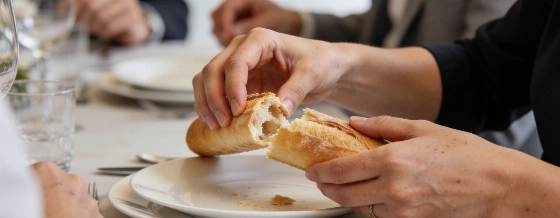
At formal dinners in France, slicing bread with a knife is seen as rude. The expected gesture is much simpler—and it signals respect for tradition and social codes
In France, the way you handle bread at the dinner table can quietly signal whether you understand the rules—or stand out as an outsider. Many Americans, and even plenty of French people, instinctively reach for the bread knife to slice up a baguette for everyone. It feels generous, practical, and neat. But in formal French dining, this move is considered impolite. The etiquette is clear: break off your own piece of bread with your hands, not with a knife.
This expectation surprises many, especially those who grew up believing that slicing bread into tidy rounds was the polite, even refined, approach. According to Marmiton, a leading French food site, the correct gesture is to tear off a small piece of bread by hand as you eat, rather than passing around a knife or a basket of pre-cut slices. The goal is to keep the table clean, avoid a mess of crumbs, and show you know the social codes that still matter in French culture.
The roots of this custom run deep. Manuals of etiquette from the 1800s, now archived in France’s national library, already described the expectation: each guest should break their bread, piece by piece, without using a knife at the table. The tradition is not just about neatness. It’s about signaling respect for the group, for the meal, and for the rituals that define a shared table.
There’s also a religious echo. The act of breaking bread by hand traces back to the Christian tradition of the Last Supper, where Jesus broke bread and shared it with his disciples. Over centuries, this gesture became a symbol of community and connection, outlasting its religious origins. Even in secular France, the habit persists: bread is broken, not sliced, and passed around as a sign of conviviality, not technical skill.
For guests, the rule is simple but specific. Keep your piece of bread near your plate. When you want to eat, break off a small bite-sized piece with your fingers—never tear off a large chunk or use your knife or fork. Ideally, do this over your plate to catch crumbs. If you’re hosting, pre-cut rustic loaves into small pieces in the kitchen before the meal, then serve them in a basket so guests can help themselves without needing a knife at the table.
These details may seem minor, but they matter in settings where tradition and social cues carry weight—think dinners with future in-laws, business meals, or gatherings where you want to show cultural awareness. As discussed in our coverage of leadership and subtle social signals, small gestures can shape how others perceive your respect for group norms.
According to Marmiton, the etiquette around bread is not a modern invention or a passing fad. It’s a living tradition, reinforced by generations and still observed in many French homes and restaurants. While few Americans will be judged harshly for slicing bread at a casual meal, knowing—and following—this custom can help you navigate formal settings with confidence.
Recent surveys in France show that over 60% of adults still prefer to break bread by hand at formal meals, and etiquette schools continue to teach this practice as part of basic table manners. In the U.S., bread etiquette varies widely by region and family tradition, but awareness of international customs is growing, especially among those who travel or work in multicultural environments. Understanding these nuances can help avoid awkward moments and demonstrate cultural fluency in both personal and professional settings.