
Sweltering summer nights can wreck your sleep, but you don’t need AC to get relief. A wellness architect shares three practical, science-backed tricks to lower the temperature in your bedroom and help you rest better tonight
When summer heat lingers after dark, bedrooms can turn into ovens and sleep quality tanks. Many Americans reach for the AC remote, but architect and wellness designer Leo Rogel argues that you can cool a room with just a fan, water, and a little strategy—no expensive equipment or energy spike required. His approach is rooted in physics, not gadgets: use airflow, evaporation, and the natural drop in outdoor temperature to your advantage.
Most people assume a fan alone will do the trick. But as Rogel points out, fans don’t actually lower the air temperature—they just move it around. If the air is already hot, a fan can end up circulating that heat, offering little real relief. The real benefit comes when you combine airflow with moisture and cooler outside air, which can drop the perceived temperature by several degrees and make sleep possible again.
Fan Tricks That Actually Work
Start by lightly misting the air in your bedroom with a spray bottle before bed. Five to ten pumps aimed at the center of the room is enough—don’t soak the walls or bedding. As the fine droplets evaporate, they absorb heat from the air, making the room feel less stifling. This works best in dry climates, but even in humid areas, a little extra evaporation can help.
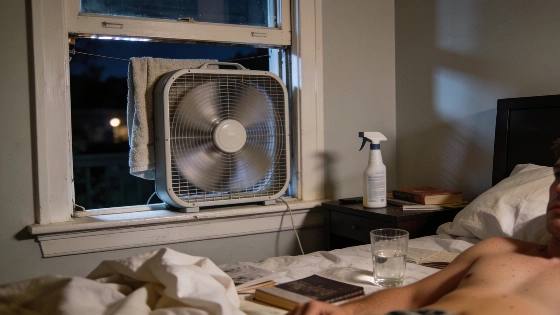
No spray bottle? Wet a towel with cold water, wring it out well, and drape it behind your fan so the airflow passes over the damp fabric. The moving air speeds up evaporation, cooling the breeze that reaches your bed. Just make sure the towel isn’t dripping and stays clear of the fan’s motor and plug. This simple setup mimics the effect of a small evaporative cooler—no chemicals, no noise, no risk of over-drying the air.
The third move: use the fan to pull in cooler night air. Once the temperature outside drops below your indoor reading, place the fan in your open window facing inward. Open a door or window on the opposite side of the room or apartment to create cross-ventilation. This draws in fresh, cooler air and pushes out the built-up heat. According to Rogel, this method is especially effective after sunset, when outdoor temps finally dip.
Health and Sleep Considerations
To get the most from these tricks, keep your home sealed during the day—close blinds, curtains, and windows to block out heat. Only open up once the outside air is cooler than inside. The CDC and sleep experts recommend aiming for a bedroom temperature around 65°F (18–19°C) for optimal rest, though that’s tough to hit in a heat wave. If your indoor temperature climbs above 90°F (32°C), a fan alone can actually increase dehydration risk, so use caution and stay hydrated.
Lightweight sheets, minimal electronics, and turning off unnecessary lights can also help keep things cool. After using a damp towel, hang it outside the bedroom to dry and avoid excess humidity. Every degree matters when it comes to sleep quality—research shows that even small increases in nighttime temperature can disrupt deep sleep and leave you groggy the next day.
Why Sleep Suffers in the Heat
When your body can’t shed heat at night, it struggles to reach the lower core temperature needed for deep, restorative sleep. That’s why tossing and turning is so common during summer heat waves. Chronic poor sleep isn’t just uncomfortable—it’s linked to higher rates of anxiety, depression, and even cardiovascular risk. As recent research on sleep and brain health in older adults shows, maintaining a cool sleep environment is critical for both mental and physical well-being.
According to Top Santé, these low-tech cooling strategies can make a real difference for anyone struggling with hot nights. They’re safe, affordable, and don’t require a major lifestyle overhaul—just a willingness to experiment and pay attention to what works in your own space.
Evaporative cooling is a time-tested method that’s been used in homes for centuries, especially in dry regions. Modern studies confirm that even small amounts of moisture in moving air can lower perceived temperature by several degrees. The U.S. Department of Energy estimates that using fans and natural ventilation instead of air conditioning can cut summer energy bills by up to 30%, while also reducing environmental impact. For those with sleep disorders or chronic insomnia, optimizing bedroom temperature is a key part of behavioral sleep therapy and is often recommended alongside other non-drug interventions.