Viral plank challenges push for longer holds, but experts say most adults see better results with shorter, high-quality planks and smarter variations that protect your back and actually strengthen your core
Five-minute plank videos are everywhere. But the real question isn’t how long you can hold on. It’s whether your core is actually working. Most adults don’t need marathon holds to get stronger. In fact, holding a plank too long can shift the load from your abs to your joints and lower back. That’s not progress. That’s risk.
One study in the Journal of Human Kinetics tracked men aged 18 to 25. They averaged about 124 seconds in a forearm plank. Women in the same group managed 83 seconds. But these numbers aren’t goals for everyone. Fitness coaches quoted by Men's Health say most people get the best results with planks between 30 and 60 seconds—if your form is perfect. The moment your hips sag or your back arches, you’re not training your core anymore. You’re just fighting the clock.
For beginners, starting with just 15–20 seconds per plank is enough, and only increasing the time by 5–10 seconds as long as your form stays solid.
Trying to hold longer is a common mistake. After a minute or two, fatigue takes over. Your shoulders creep up. Your abs stop working. The strain lands on your spine. The world record for a plank is over nine hours. That’s a stunt, not a fitness plan. For real strength and injury prevention, quality matters more than time.
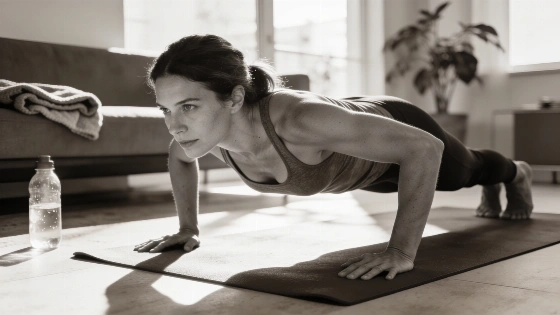
What does good form look like? Your body should be straight from head to heels. Shoulders stay low. Glutes are tight. Tuck your pelvis a bit to protect your back. If you can’t hold this shape, drop to your knees or cut the time. Don’t hold your breath. If you do, you’ll lose tension where it counts.
Age and fitness level change the numbers. Adults under 40 can aim for 45 to 90 seconds. If you’re between 40 and 59, 30 to 75 seconds is solid. Over 60? Twenty to 60 seconds is enough. Start with 20 seconds. Add five seconds each week. Use a knee plank if you need to. The second your abs stop firing or your hips dip, stop. Even if the timer says you could keep going. Form comes first.
Fitness expert Stuart McGill suggests that holding a plank for more than 60 seconds offers little extra benefit for spinal stability. Instead, he recommends short, high-tension holds of 10–30 seconds, repeated several times, to maximize core engagement and protect your back.
Once you can hold a strict plank for 60 to 90 seconds without breaking form, it’s time to make it harder. Don’t just add seconds. Add challenge. Try a plank with a dumbbell drag. Slide a weight under your chest with the opposite hand. Keep your hips steady. Or do a renegade row. Pull a dumbbell toward your hip while holding a plank. The RKC plank is another option. Ramp up tension for 10 to 20 seconds. These moves force your core to stabilize against movement, not just gravity.
Short, repeated sets work better than one long hold. Canadian researcher Stuart McGill backs this up. He recommends 10-second holds, repeated several times. This builds endurance without overloading your joints. It keeps your muscles working and your form sharp. That’s what protects your back and builds real strength.
Fitness trends love to promise that more is better. But like step counts—where recent research shows you don’t need 10,000 a day—the truth is more complicated. The best results come from focused, intentional effort. Not endless sessions that leave you sore and frustrated.
Chasing plank records misses the point. What matters is building a core that supports your daily life, not just your ego. The evidence is clear. Short, high-quality holds with perfect form and smart progressions do more for your strength and spine than any viral challenge. The fitness industry sells extremes. Your body needs precision, not punishment.
Core training is bigger than planks. The transverse abdominis, obliques, and spinal erectors all help stabilize your trunk and protect your back. Moves that challenge your core to resist rotation or extension—like side planks, dead bugs, and bird dogs—can round out your routine. Consistency and good form matter more than any stopwatch.