

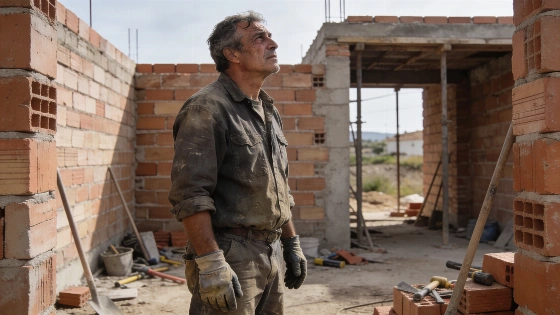
A veteran Spanish mason explains why young people avoid construction, and how older workers and tough job conditions are pushing the industry to its limit.
Pascual, a 50-year-old mason in Spain, starts his day before sunrise. He runs a small crew. Four projects need his attention. The real problem? He can't find enough skilled hands. Not even close.
“There’s no new generation coming in,” Pascual says. He watches as older workers retire. Few young people want to take their place. Some new hires show up, but most lack basic skills. Many don’t want to learn. Immigrants fill some jobs, but Pascual says true professionals are rare. The old way—start as a laborer, learn by doing, move up—has faded. Now, few want to start at the bottom. Even fewer stick around long enough to master the trade.
By August 2026, Spain's construction sector employed 1.48 million insured workers, an increase of over 90,000 from the previous year, yet the industry faces a sharp decline in young entrants and a rapidly aging workforce.
The numbers back him up. In Spain, more than 65% of construction workers are now over 45. That’s double the share from twenty years ago. The average age in the field jumped from 37 to 45 in just 15 years. France faces the same squeeze. A France Travail survey says over 16,000 mason jobs will open in 2025. More than 70% will be hard to fill. Retirements drain the sector. Fewer young trainees step in. The gap grows wider. It’s not just about headcount. It’s about finding people who can lead a project and deliver real quality.
An ABC economic report shows the long slide. Since the 2008 building boom, Spain’s construction workforce shrank by 1.2 million. By late 2025, only 1.6 million people worked in construction. In 2008, it was 2.8 million. The same report says the construction production index dropped 9.8% in July 2026. Building alone fell 35%. The crisis is real.
Training new workers is tough. For small business owners like Pascual, hiring a young apprentice is a gamble. Insurance costs hundreds of euros. A trainee may not earn enough to cover it. The old days are gone. People once worked for less just to learn. Now, every hour must pay off. Slow, hands-on training is a luxury. Few can afford it. The math has changed. Investing in the next generation is harder than ever.
The Spanish Confederación Nacional de la Construcción estimates a shortage of 700,000 workers in the sector, with the average age now around 45 and only one in ten employees under 30 years old.
The job is hard on the body. In France, construction workers lose about 8 million workdays each year to injuries and illness. That costs over a billion euros. Masons lift heavy loads, work at heights, and breathe dust. Silica dust is a real danger. It can cause cancer. Safety rules call for less manual lifting and more protective gear. Still, the risks stay high. Young people see safer, better-paid jobs in tech or marketing. Construction can’t compete with that promise.
This isn’t just a construction problem. As reported earlier, even seasonal changes can wear down workers in tough jobs. Construction’s crisis shows what happens when economics, age, and health risks collide. The impact is clear.
The shortage of skilled masons is more than a numbers issue. It’s a warning. Any job that needs hands-on skill and physical grit could face the same fate. Without real investment in training, safer work, and respect for manual trades, the pipeline will keep shrinking. The future depends on it. Will these jobs be worth it for the next generation?
Silica exposure is a major threat in construction. Masons who work with concrete, brick, and stone face the highest risk. Breathing silica dust over time can cause silicosis, lung cancer, and other deadly diseases. The U.S. Occupational Safety and Health Administration (OSHA) sets strict limits and requires employers to provide protective gear and training. But enforcement is spotty. Many workers still face danger. Raising awareness and improving safety standards are key to protecting those who build our cities and homes.