

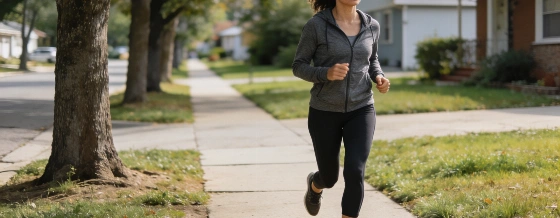
Stuck at a desk all day, I never hit 10,000 steps. But a 30-minute Japanese walking method changed my activity level and made exercise feel possible again
Working from home left me glued to my chair, watching my step counter stall out at 6,500—far from the 10,000-step goal that’s become a modern health mantra. The evening walk I forced myself to take felt endless, and the pressure to hit a number only made me dread movement. I needed something more realistic, so I started searching for alternatives. That’s when I found the Japanese 3-3-30 walking method, a time-based approach that promised results without the step-count obsession.
Instead of tracking every step, I committed to a single 30-minute session of what’s called Interval Walking Training (IWT). The change was immediate: my daily average jumped to about 8,100 steps, even though the session itself felt surprisingly short. The science behind it is solid. Developed at Shinshu University in Japan, the 3-3-30 protocol alternates three minutes of brisk walking with three minutes at a slower pace, repeated five times. This structure, designed by researchers Hiroshi Nose and Shizue Masuki, is more than a fitness trend—it’s a clinically tested intervention.
In a 2007 Japanese clinical trial, 246 adults with an average age of 63 were split into groups. Those who followed the 3-3-30 method saw lower blood pressure, stronger thigh muscles, and higher VO2peak scores compared to those who walked at a steady pace. The research concluded that high-intensity interval walking can help protect against age-related increases in blood pressure and declines in muscle strength and aerobic capacity. These are not minor benefits—they’re measurable, meaningful changes that go beyond what most step-counting routines deliver.
Psychologically, switching from an abstract number to a concrete 30-minute session changed everything. I now fit my 3-3-30 walk between video calls, and the alternating three-minute segments make the time fly. Paradoxically, my total steps increased, even though I stopped chasing the 10,000 mark. The key, according to researchers, is adding truly dynamic intervals. A 2024 review by Kristian Karstoft found that after five months of IWT, participants improved their VO2peak by 10%, increased knee extension and flexion strength by 13–17%, and reduced systolic blood pressure by an average of 9 mmHg and diastolic by 5 mmHg.
The protocol is simple: start with five minutes of easy walking to warm up, then alternate three minutes fast and three minutes slow, repeating five times. I use the talk test—during the fast segments, I can talk but not sing; during the slow ones, I catch my breath. Family doctors like Suzanne Wylie, MD, emphasize that regular activity helps maintain a healthy weight and strengthens muscles and bones, which is crucial for mobility and osteoporosis prevention as we age. I aim for three sessions a week, indoors or outside, without worrying about performance. If you experience chest pain, dizziness, or unusual shortness of breath, stop and consult a healthcare professional, especially if you have a heart condition.
For anyone who’s struggled to make walking a habit, it’s worth noting that cycling can also be a highly efficient way to boost daily movement—though, as some studies show, factors like hills and muscle fatigue can complicate the equation. The point is, the best routine is the one you’ll actually stick with, and for me, the 3-3-30 method finally made movement feel sustainable.
Interval Walking Training (IWT) is gaining traction in the U.S. as a practical, evidence-based approach to physical activity. Unlike traditional step goals, IWT focuses on alternating intensity, which has been shown to improve cardiovascular health, muscle strength, and aerobic capacity in both older adults and those with sedentary lifestyles. The method is accessible, requires no special equipment, and can be adapted for different fitness levels, making it a promising option for people looking to break out of inactivity without overwhelming demands.