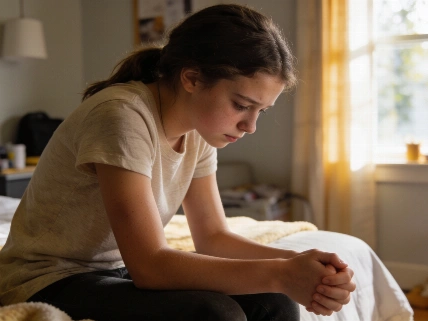


After a painful breakup triggered by her own actions, a young woman faces guilt, shame, and fears of never being forgiven. A cognitive behavioral therapist explains how to process regret and move forward
There’s a particular kind of shock that comes when you realize you’ve pushed away someone you love—and it’s your fault, not theirs. For many, what follows is a mix of guilt, shame, and a frantic wish to undo the damage. But when the other person cuts off all contact, blocking every route back, the finality can feel overwhelming. You start to wonder: Was I really that toxic? Did I just ruin my only real chance at connection?
Self-blame is easy to fall into, especially when regret is fresh and the loss feels total. But in therapy, it’s clear that our sense of being "bad" is often warped by emotion. In the middle of conflict, both people act out old wounds and habits. The story you tell yourself—"I’m unlovable, I always ruin things"—rarely matches the full picture. Instead of getting stuck in vague self-accusations, it helps to look at what actually happened. What did you say or do? What was the real impact? Sometimes, the damage isn’t as permanent as it feels in the moment.
According to a 2026 article in Psychology Today, the cooling of relationships is often linked to how rejection, vulnerability, and self-esteem interact during conflict and blame.
After a breakup, guilt can make you want to beg for forgiveness or make big promises. But acting out of panic rarely fixes anything. When you’re emotionally wrecked, you’re likely to overpromise and fall short, which only leads to more disappointment. It’s better to pause and look at your own triggers. What situations or behaviors from others set you off? Relationships are rarely one-sided; both people react to each other, often without realizing it.
Modern family psychology points out that breakups usually aren’t caused by a single "bad act," but by repeated patterns—defensiveness, control, withdrawal, criticism—that keep the distance alive. As mMarriage.ca notes, it’s more useful to understand and interrupt these cycles than to try to fix everything at once. Experts suggest looking at specific triggers, the order of events, and repeated reactions to get clarity before reaching out or apologizing.
Sometimes, the best move is to step back and focus on your own healing. This isn’t about pretending you don’t care. It’s about building enough self-awareness to avoid repeating the same mistakes, whether with this person or someone new. At 23, you still have your whole adult life ahead. The work now is to understand your own reactions, not to punish yourself for being imperfect. If you notice your mood sinking into ongoing sadness, numbness, or hopelessness, it’s worth asking if you’re dealing with more than heartbreak. Clinical depression can follow a major loss, and you don’t have to handle it alone. A mental health professional can help you figure out if your symptoms are situational or something deeper.
Recent materials in conflictology and family therapy recommend taking a pause and reducing tension when arguments escalate into mutual defensiveness rather than problem-solving. This approach is supported by research showing that habitual defensive strategies and criticism can quietly erode a marriage over time.
Breaking the cycle
Isolation after a breakup can make everything feel worse. Reaching out to friends or family—even if you’re embarrassed—can give you perspective and support. Sometimes, just hearing that you’re not the only one who’s made mistakes in love is enough to break the cycle of self-blame. If reaching out feels impossible, remember that many adults struggle to rebuild social ties after a rupture, as described in this recent article on the exhaustion of making new friends when you’re already emotionally drained. The point isn’t to downplay your pain, but to remind you that recovery is possible, even when it feels out of reach.
Psychology Today suggests that these situations aren’t proof you’re "ruined forever," but are cycles of mutual reactions that can be recognized and changed. The most effective first step is to get clear about the facts and your triggers before thinking about contact or apologies.
If you still want to reconnect with your ex, do it from a place of clarity, not desperation. By then, you’ll have a better sense of what you can actually offer and what you need in return. If the other person isn’t ready or willing, that’s information—not a judgment on your worth. The real growth comes from facing your own patterns, not from chasing someone else’s forgiveness.
There’s no shortcut through regret, but there is a way forward. It starts with honest self-examination, a willingness to seek help, and the courage to believe that one relationship—no matter how important—doesn’t define your ability to love or change. The work is hard, but it’s yours to do, and it matters.
Cognitive behavioral therapy (CBT) is often recommended for people struggling with guilt, shame, and depression after a breakup. CBT helps you spot distorted thinking, challenge catastrophic beliefs, and build healthier coping skills. By focusing on concrete behaviors and thought patterns, CBT can break the cycle of self-blame and open the door to more balanced relationships in the future.
For more on how everyday habits can quietly damage a marriage, see this overview from TheQueenZone, which looks at how arguments and defensive habits can slowly undermine connection.