

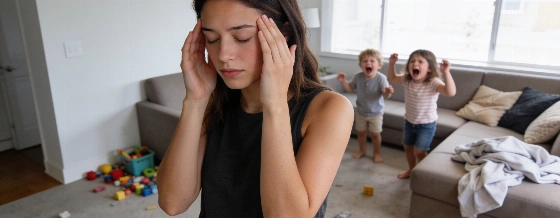
Feeling overwhelmed or even angry when a child has a meltdown is more common than most parents admit. Here’s what drives these reactions and how to regain control before things escalate
It’s a scenario many adults dread: a child’s tantrum erupts over what seems like nothing, and instead of patience, you feel a surge of irritation—or worse, the urge to lash out. According to Psytheater.com, these moments can leave even the most well-intentioned adults questioning their own emotional stability and fitness for parenthood.
For some, these reactions trace back to childhood experiences or family patterns. If you grew up in a home where anger was met with punishment or emotional outbursts were shut down, your body may now respond to a child’s distress with a spike of stress and a reflex to control or silence it. The brain’s emotional regulation systems, especially in young adults, are still developing well into the mid-twenties. This means that impulsive reactions—like wanting to yell or even hit—can feel alarmingly close to the surface, especially under stress or fatigue.
Hormonal shifts and life transitions also play a role. The late teens and early twenties are marked by major changes: moving out, starting college or work, navigating new relationships. Add the disruption of houseguests or a noisy environment, and your tolerance for chaos can plummet. The brain’s stress response system, primed by cortisol, can make a child’s crying feel physically unbearable, pushing you toward fight-or-flight reactions rather than calm problem-solving.
Understanding the Triggers
Not every adult responds to a child’s meltdown with empathy. For some, the sound of crying or screaming triggers a sense of helplessness or even anger. This isn’t just about personality—it’s a mix of biology, learned behavior, and current stress levels. When you can’t restore peace or influence the situation—especially if the child isn’t yours—frustration can build quickly. The sense of lost control, combined with exhaustion, can make even minor disruptions feel intolerable.
It’s important to recognize that young children’s brains are not wired for self-control. Their emotional outbursts are not calculated manipulations but signs of developmental immaturity. Reframing your internal narrative—from “they’re doing this on purpose” to “they literally can’t help it right now”—can help lower your own emotional temperature. Compassion for yourself is just as crucial. If you find yourself judging your reactions harshly, ask what you’d say to a friend in the same position. Would you offer blame, or understanding?
Research shows that parents and caregivers who practice self-compassion are less likely to act on aggressive impulses and more likely to recover quickly from moments of anger. This doesn’t mean excusing harmful behavior, but it does mean recognizing that emotional regulation is a skill—one that can be learned and strengthened over time.
Strategies for Regaining Control
When you feel anger rising in response to a child’s tantrum, the first step is to pause. Remove yourself from the immediate situation if possible, even for a few seconds. Take slow, deep breaths and remind yourself that your reaction is a stress response, not a moral failing. If you’re worried about losing control with your own child, consider building a toolkit of coping strategies: mindfulness exercises, support from other parents, or professional counseling.
It’s also worth noting that the pressure to be a perfect parent—or even a perfect aunt, uncle, or babysitter—can make these moments feel even more loaded. Social media and parenting forums are full of stories about gentle discipline and endless patience, but real life is messier. As one mother shared in a related story about post-maternity anxiety, the gap between expectation and reality can fuel guilt and shame. For more on how parental stress can spiral, see this account of mothers struggling to switch off after maternity leave.
Data from the Centers for Disease Control and Prevention (CDC) indicate that nearly 1 in 7 U.S. children aged 2–8 has a diagnosed mental, behavioral, or developmental disorder. For parents and caregivers, this means that emotional outbursts are not only common but often part of a larger pattern that requires patience, structure, and sometimes professional support. Recognizing the difference between a typical tantrum and signs of deeper distress is key to responding effectively and protecting both the child’s and your own well-being.
Emotional regulation is a cornerstone of healthy parenting and caregiving. Cognitive-behavioral therapy (CBT) and compassion-focused therapy are two evidence-based approaches that help adults identify triggers, challenge unhelpful thoughts, and build new habits of response. Many therapists now offer online sessions, making support more accessible for busy parents. Over time, learning to pause, reflect, and respond—rather than react—can transform not just your relationship with children, but your own sense of self-control and resilience.