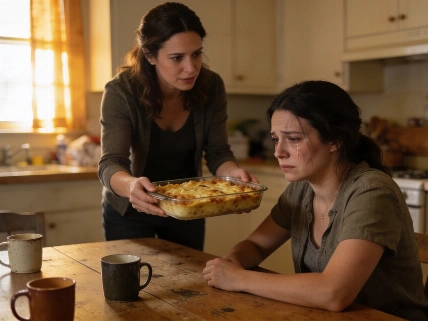

Two years after her mother’s death, a young woman still feels trapped by guilt and longing, unable to move forward or find relief from the pain.
Guilt can settle in deeply when you lose a parent without a chance to say goodbye. For some, the pain doesn’t fade—it sharpens, circling back on itself, fed by regret and the sense that something important was left unfinished. This isn’t just sadness. It’s a heavy, physical ache that can disrupt sleep, appetite, and even your sense of resilience.
When a parent dies suddenly or after a long illness, the mind often clings to the last missed chance. The absence of a final conversation or gesture can haunt those left behind, especially if the relationship was close. For a young woman who lost both parents before thirty, the pain is sharper because of how suddenly her mother died and the feeling that she never got to say what mattered most.
In current clinical classifications, prolonged and exhausting grief after the death of a loved one is recognized as a distinct disorder: in DSM-5-TR and ICD-11, it is termed prolonged grief disorder, with a minimum symptom duration of 12 months for adults in DSM-5-TR and often 6 months in ICD-11.
Grief that lingers for years isn’t a sign of weakness or failure. Psytheater.com notes that mourning doesn’t follow a straight line and can’t be forced to fit a schedule. Expecting pain to fade on a set timeline only adds pressure and shame, making it harder to process the loss. Grieving is active work: it needs attention, space, and sometimes the willingness to revisit memories that hurt as much as they comfort.
Living with the ache
Trying to hold back tears or “move on” before you’re ready can backfire. Emotional numbness, irritability, and even physical symptoms like fatigue or headaches may show up when grief is pushed aside. Therapists who work with complicated grief often encourage people to mourn openly—cry, talk about the person, and share stories with those who understand. This isn’t self-indulgence; it’s necessary work.
For many, rituals help fill the gap left by an unspoken goodbye. Holding a photograph, writing a letter to the person who died, or saying aloud what you never got to say can bring some relief. These acts aren’t about pretending the person can hear you—they’re about honoring your own need to express what was left unsaid. Some find comfort in faith communities, others turn to friends, support groups, or therapy for perspective and validation.
The DSM-5-TR replaced the earlier research label persistent complex bereavement disorder with the term prolonged grief disorder, which is now more commonly used in clinical practice and educational materials.
Physical self-care is easy to overlook after a loss. Grief can break routines, making it tempting to skip meals, lose sleep, or avoid exercise. But the body’s needs don’t pause for sorrow. Keeping up with basic habits—eating, moving, getting outside—can help restore a sense of control, even when emotions feel chaotic.
The guilt of not saying goodbye
The belief that you “should have” done more or been there at the end is a common torment. But most people don’t get a perfect farewell. Death often comes without warning, and even those who are present may feel they missed something important. The guilt is real, but it isn’t proof of failure—it’s a sign of love and the mind’s way of trying to rewrite what can’t be changed.
Therapists sometimes suggest practical exercises for those stuck in guilt. One is to write out the story of the loss: what the person meant to you, the circumstances of their death, and how it changed your life. Reading this aloud can clarify the depth of your bond and the reality of your pain. Another is to write a statement of self-compassion, reminding yourself that grief is a measure of love, not a flaw to fix.
For those who need more support, individual therapy can offer a safe place to work through unresolved feelings. Group settings or online forums can also help, especially when others share similar experiences. As seen in related stories, the isolation that comes with grief can ease when you connect with people who understand.
Moving forward without forgetting
There’s no shortcut through grief, and no single ritual or conversation will erase the pain of losing a parent. But over time, the sharpness can soften, making room for new meaning. The goal isn’t to “get over” the person, but to carry their memory forward while allowing yourself to change and grow.
What matters is not judging your own process. Grief isn’t a problem to solve but a reality to live through. The urge to avoid or suppress pain is understandable, but it rarely works. Instead, honoring your feelings, seeking support, and practicing self-compassion are the real acts of courage. The pain may never disappear, but it can become less suffocating, leaving space for new connections and possibilities.
Complicated grief is a recognized clinical condition, different from ordinary sadness or even major depression. It often involves persistent longing, intrusive thoughts about the person who died, and trouble re-engaging with life. According to a recent clinical review, the criteria for prolonged grief disorder require symptoms to last at least 6 months under ICD-11 or 12 months under DSM-5-TR. Cognitive behavioral therapy, psychodrama, and other evidence-based approaches can help people process loss, challenge guilt, and rebuild a sense of purpose. For those struggling to move forward, seeking professional help is not a defeat but a step toward regaining agency and meaning after loss.