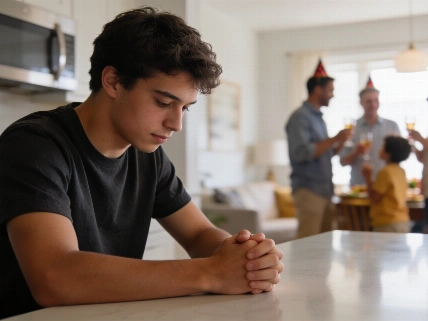

Feeling stuck at thirty with no romantic history can trigger shame and self-doubt. The urge to compare yourself to others grows stronger as social circles shrink and isolation deepens.
When you reach your thirties without any romantic experience, it can feel like a personal failing. For many Americans, the pressure to be in a relationship isn’t just social—it’s internal, persistent, and hard to ignore. The real struggle isn’t simply being single. It’s the feeling that you’re falling behind, that your life doesn’t measure up because it doesn’t follow the usual script.
According to a Bowling Green University study, the share of never-married adults aged 30–39 in the U.S. has surged from 15% in 1960 to 48% in 2024.
Isolation often feeds on itself. Without a partner and with few close friends, it’s easy to withdraw. The less you reach out, the harder it gets to break the pattern. Job searches stall, hobbies fade, and your world shrinks to your own doubts. Psytheater.com notes that this kind of self-reinforcing loop is common among adults who feel left out of the relationship scene.
The average age at first marriage in the United States has risen to about 29 for women and 31 for men, reflecting a significant delay compared to 2006. This trend highlights broader social changes in how and when people choose to form long-term partnerships.
Try mapping out what a good day or week would look like if relationships weren’t part of the picture. What kind of work would challenge you? What activities would you try if you weren’t worried about appearances? Which qualities in others do you admire and want to develop in yourself? This isn’t about pretending you don’t want connection, but about building a life that won’t fall apart if romance never comes.
As your life starts to feel more like your own, the urge to compare fades. You care less about other people’s timelines and more about your own progress. Ironically, this is often when real connections start to happen—not because you’re chasing them, but because you’re finally living in a way that draws curiosity and respect. As reported earlier, breaking out of rigid routines can help you rediscover what you actually want, not just what you think you should want.
Recent demographic data shows that being single at thirty is more common than ever. A Washington Times analysis found that the share of 40-year-olds in the U.S. who have never married jumped from 6% in 1980 to 25% in 2021. By 2024, about 18% of men aged 40–64 had never married. These changes reflect shifting social norms and economic pressures that have made later or non-marriage a reality for many adults. The Washington Times analysis points to broader forces behind these trends.
Some barriers to intimacy run deeper. If building a fuller life still leaves you feeling stuck, it might be time to work with a therapist. Cognitive behavioral therapy, psychodrama, and other approaches can help untangle the beliefs and fears that keep you from reaching out. But the essential step is the same: stop waiting for a relationship to prove your worth. Start building a life that feels meaningful, with or without a partner. The idea that happiness starts with romance is just that—a myth. The real work is learning to shape your own story, even if it doesn’t match anyone else’s expectations.
For those struggling with constant comparison and self-doubt, cognitive behavioral therapy (CBT) offers practical tools to break negative thought cycles. CBT focuses on spotting distorted beliefs—like the idea that being single at thirty is a failure—and replacing them with more balanced, realistic views. This approach is especially helpful for people stuck in rumination or avoidance, giving concrete ways to re-engage with life on their own terms.