

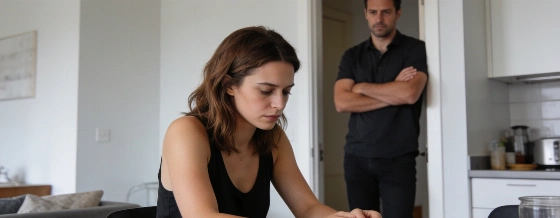
Uncontrollable jealousy can poison even the strongest relationships. A clinical psychologist explains why some people feel threatened by everything and everyone and what it takes to break the cycle
Jealousy rarely arrives all at once. It starts as a small doubt and quickly grows. You might catch yourself scrolling through your husband’s social media, feeling a jolt at every like or comment, sometimes even wishing he’d just log off for good. The urge to check, question, and control can take over, and the guilt that follows is just as heavy. For many women, this isn’t a passing mood but a daily struggle that wears both partners down and leaves intimacy in pieces.
Why does jealousy get so strong? The answer is rarely straightforward. Sometimes, it’s a reaction to a real betrayal—a partner who once crossed a line, whether through cheating, secretive flirting, or questionable behavior at work. Even years later, that memory can keep suspicion alive, making trust feel fragile. In other cases, the partner hasn’t done anything wrong, but old wounds from previous relationships keep replaying, and the fear that history will repeat itself never quite fades. No amount of reassurance seems to settle it.
In a 2026 mixed-methods study, retroactive jealousy—obsessive thoughts about a partner’s past or imagined romantic episodes—was statistically linked to a decline in the positive functions people attribute to mental images of third parties, such as catharsis and relationship maintenance.
Sometimes, the roots go even deeper. For some, jealousy starts in childhood. If a parent was distant, unpredictable, or harsh, a child learns to expect instability and rejection from the people they love. As adults, these early lessons can turn into a constant fear of being left, fueling hypervigilance and a need to control. Even small things—a partner coming home in a good mood after a meeting—can spark suspicion and accusations, making daily life feel like a minefield.
Breaking the cycle
Getting past jealousy takes more than just willpower. If the pain comes from a partner’s past betrayal, the couple has to decide whether to rebuild trust or move on. That means facing the facts: Was it a one-time mistake or a pattern? Did the partner take responsibility, or did they brush it off? Healing is possible, but only if both people are willing to do the work of forgiveness and openness. Sometimes, therapy is the only way forward.
When jealousy is tied to old wounds from previous relationships, it helps to name what’s really going on. Telling your partner, "I know you haven’t given me a reason to doubt you, but I’m still haunted by what happened before," can ease tension and invite understanding. Therapy approaches like EMDR or trauma-focused work can help process the pain so it stops taking over the present. The goal isn’t to become carefree, but to stop letting fear run the show.
In a large-scale survey of 58,221 people, 58.4% were classified as pursuers and 41.6% as withdrawers, providing empirical background for why the 'pursuer–distancer' cycle often intensifies jealousy and control in relationships.
For those whose jealousy goes back to childhood attachment, the work is even more personal. Visualization exercises—imagining the supportive adult you never had—can help calm the panic that flares up. This isn’t a quick fix, but a daily practice of building a sense of safety inside. Over time, your nervous system learns that not every absence or distraction means you’re being abandoned. The urge to check, accuse, or control starts to lose its grip.
Real-world fallout
Jealousy that goes unchecked rarely stays contained. It can chip away at self-esteem, wreck intimacy, and turn small arguments into major blowups. Partners may feel smothered and start to pull away or keep secrets, which only feeds more suspicion. Children pick up on the tension, learning lessons about love that can echo into their own adult lives. According to Psytheater.com, these patterns often repeat across generations unless someone decides to break the cycle.
Sometimes, jealousy is tangled up with other issues—low self-worth, chronic anxiety, or even hormonal shifts. There’s no single explanation that fits every case. But one thing is clear: jealousy, if left unexamined, can become a self-fulfilling prophecy. The more you try to control, the more connection slips away. As seen in reported earlier, blurred boundaries and emotional insecurity can turn relationships into battlegrounds where nobody wins.
There’s no shame in asking for help. Even the best advice can’t replace the insight of a good therapist. But understanding how jealousy works—where it comes from, how it operates, and what it costs—can be the first step toward regaining your peace of mind and rebuilding trust. The real work isn’t about policing your partner, but about learning to live with uncertainty without letting it take over. In my experience, couples who face jealousy honestly and with humility have a better chance of turning pain into growth, instead of letting it destroy what matters most.
Attachment theory is now central to understanding adult relationships. Developed by John Bowlby, it explains how early bonds with caregivers shape our expectations of intimacy, trust, and security. Anxious attachment, in particular, can make adults hypersensitive to the threat of being left, leading to jealousy and control. Recognizing your attachment style isn’t about blaming your past, but about gaining the self-awareness needed to change how you relate to others now.
Recent research shows that after infidelity, trust is usually rebuilt not through promises but through actions—being transparent, keeping agreements, and gradually letting go of controlling behaviors. As detailed in a 2026 review on healing after betrayal, these steps are key to restoring a sense of safety in the relationship.