

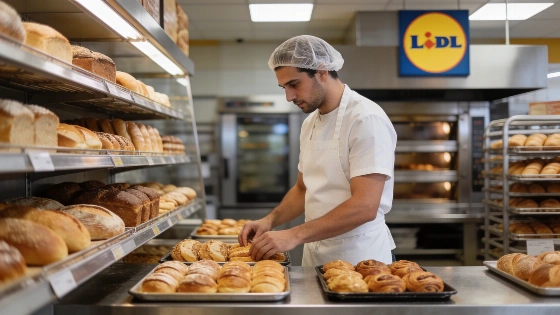
Behind the bakery counter at Lidl, paychecks for bakers and pastry staff rarely match the public’s assumptions. From base pay to bonuses and the elusive thirteenth month, the real numbers tell a different story
Step behind the counter at Lidl and the numbers tell a blunt story. Most bakers start out earning just above the legal minimum, and even after years on the job, their paychecks rarely climb far beyond that. The jump from entry-level to senior baker is slow, with only small raises along the way.
For a full-time Lidl baker in 2026, the net monthly pay sits at $1,477.93 for a 35-hour week. That figure comes straight from official records. The retail sector’s collective agreement locks in the pay scale, so there’s little room to negotiate. Over time, annual raises and extra duties can nudge the net salary up to $1,500. For those who stick around until late career, $1,700 a month is about as high as it goes. These numbers are before taxes and can shift a bit from store to store, but the pattern is the same everywhere.
In the United States, the federal minimum wage is $7.25 per hour, but actual pay rates for bakery workers can be higher depending on state and local laws.
The paycheck isn’t just the base wage. Lidl adds a thirteenth month, paid out in pieces, plus small bonuses for Sunday shifts, meeting targets, or taking early hours. There are perks like employee discounts and access to a social committee, but these extras usually add up to just a few dozen dollars each month. The pay stays steady and predictable, but by most standards, it’s modest.
The job itself is less about hand-shaping dough and more about keeping the process moving. Most Lidl bakers manage frozen or pre-made dough, watch the ovens, and keep shelves stocked. Some stores do have independent bakers who run their own mini-bakeries inside the supermarket, making everything from scratch. These entrepreneurs can see gross monthly income hit $3,500, but that comes with overhead, inventory costs, and sometimes payroll. Their real take-home pay swings from month to month and is far less predictable.
For people drawn to baking as a craft, the Lidl setup can feel transactional. The work is steady, the hours are fixed, and the pay is clear, but the sense of artistry is missing. The job is about logistics, not creativity, and there’s little room for personal pride in the product. As reported earlier, other skilled trades face the same shift, where efficiency wins out over tradition.
Job postings for bakery roles at other U.S. employers, such as Bimbo Bakeries USA, show hourly wages ranging from $20 to $25 for assistant managers and up to $24.74 for production staff, but these rates do not reflect Lidl's pay structure.
Marmiton calls Lidl’s pay for bakers “average” for the sector. That’s not high praise. It means the job is stable and the path is clear, but there’s little hope for a big financial jump. The thirteenth month and bonuses are real, but they don’t change the basic math. For many, the main draw is steady work, not the chance to move up.
Strip away the marketing and the numbers show what Lidl bakery jobs really offer: reliable employment, but not much more. The rewards are measured in predictability, not prosperity. For workers who want more than a paycheck, the gap between the image of the artisan and the reality of the retail baker is hard to miss. The American retail food sector, like its European counterpart, keeps betting on efficiency over expertise, and the paychecks reflect that choice.
The thirteenth month is a familiar feature in retail baking. It’s a bonus spread out over the year, meant to smooth out slow seasons and reward loyalty. While it sounds generous, the real impact on monthly income is small. For most, it’s a cushion, not a game-changer, and it rarely shifts the overall financial picture. This setup is common in European chains working in the US, but it doesn’t replace real wage growth or open doors to advancement.