Many parents underestimate one simple daily habit that can boost a child’s confidence, resilience, and sense of belonging—yet most families push it aside for chores and routines
Parenting in America today is a high-wire act. Most parents say they’re doing their best, but the pressure to raise well-adjusted, emotionally healthy kids is relentless. According to a 2025 national survey, nearly all parents report striving for their children’s well-being, yet three out of four regularly question their approach, and two-thirds admit to feeling overwhelmed by the demands of family life. The gap between intention and daily reality is wide—and it’s easy to miss what matters most.
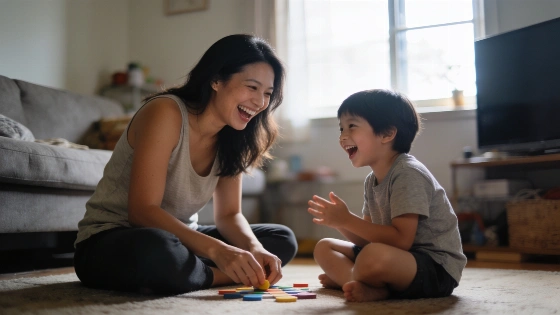
What if the most powerful tool for raising resilient, happy children isn’t a new therapy, a strict routine, or a high-tech gadget? Two leading U.S. psychologists point to something far simpler: making time to laugh and play with your kids, even when life feels chaotic. This isn’t about elaborate outings or expensive toys. It’s about genuine, shared moments—silly games, spontaneous laughter, and letting imagination take the lead. As Parade reports, these moments are not optional extras. They are the foundation of a child’s emotional security and sense of belonging.
Many parents treat play and laughter as rewards for finishing chores or as rare breaks from the grind. But research shows that these shared experiences are essential for healthy development. When parents engage in playful connection, children internalize a sense of safety and acceptance. They learn that their presence is valued, not just their achievements or compliance. This emotional safety net gives kids the confidence to explore, take risks, and recover from setbacks. It’s a message that says: you matter here, just as you are.
Clinical psychologists emphasize that warm, connected moments with parents are a stronger predictor of a child’s well-being than any single parenting style or discipline strategy. Kids who feel emotionally connected at home are better equipped to handle stress, build friendships, and adapt to new situations. The benefits ripple outward, shaping everything from academic motivation to mental health resilience. As one recent feature on emotional strategies highlights, the way families handle daily connection can quietly shape a child’s lifelong coping skills—sometimes in ways that aren’t obvious on the surface. For more on how subtle habits influence emotional health, see this analysis of how people manage their feelings beneath the surface.
According to Parade, the act of laughing and playing with your child is not a pause in their education—it is their education. These moments teach kids that they are seen and valued, building the trust and security that allow them to try new things and recover from mistakes. It’s not about being a perfect parent or creating a flawless home. It’s about showing up, being present, and letting joy have a place in the daily routine.
Recent studies from the American Psychological Association confirm that children who experience regular, positive interactions with parents—especially those involving play and humor—show lower rates of anxiety and depression symptoms. In a 2024 longitudinal study, families who prioritized shared laughter reported higher levels of emotional closeness and fewer behavioral problems in children over a two-year period. These findings reinforce the idea that small, consistent habits can have a measurable impact on a child’s mental health trajectory.
Play therapy, a well-established approach in child psychology, uses structured play to help children process emotions, build social skills, and develop problem-solving abilities. While formal play therapy is led by trained clinicians, the underlying principle applies at home: playful connection is a powerful tool for growth. Parents don’t need to be experts—they just need to make space for laughter and imagination, even in the middle of daily stress. The payoff is a stronger, more resilient family bond that supports children through every stage of development.