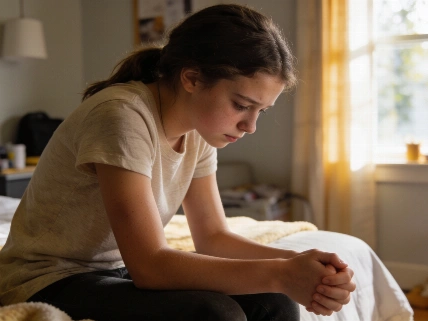

A mother worries as her 14-year-old daughter avoids friendships, rarely speaks, and refuses to part with old toys—should she push for a mental health evaluation
For many parents, watching a teenager withdraw from peers and cling to childhood objects can trigger deep concern. One mother, Lisa, describes her 14-year-old daughter as bright and well-behaved at school, but almost entirely silent at home and socially isolated. The girl has never had close friends, rarely initiates conversation, and resists letting go of any personal items—even baby toys remain untouched in her room. Attempts to introduce therapy have been met with flat refusal. According to Psytheater.com, these patterns raise difficult questions about when parental worry crosses into the territory of clinical need.
Lisa’s daughter insists she’s not bullied and claims to feel fine, but her mother can’t shake the sense that something is off. The girl’s reluctance to part with possessions stands out: she won’t allow anything to be thrown away, no matter how trivial or outdated. This behavior, paired with her lifelong quietness, leaves Lisa wondering if she’s missing signs of a deeper issue. She’s tried to open the door to therapy, but her daughter’s resistance is firm. A single visit to a psychologist ended with the professional reporting that the teen felt “normal.”
Deciding whether to push for a formal evaluation is rarely straightforward. Experts stress that not every introverted or solitary teen is in distress. Adolescence is a time when some kids naturally turn inward, focusing on their own interests and inner world. The absence of friends, by itself, doesn’t always signal a problem. What matters is whether the teen is suffering, struggling at school, or showing other changes—like shifts in appetite, sleep, mood, or motivation. Teachers and other adults who interact with the child can offer valuable perspective on her daily functioning and classroom climate.
Still, parents should remain alert to subtle warning signs. Sometimes, teens who experience bullying or emotional trauma hide their pain, insisting everything is fine to avoid adult intervention. Even if a child was once open, trauma can prompt withdrawal and secrecy. Lisa is advised to watch for changes in her daughter’s eating habits, emotional state, or school engagement. Tearfulness, nightmares, or a sudden reluctance to attend school may point to unspoken distress. Gathering feedback from teachers can help clarify whether the girl’s isolation is self-chosen or a response to social challenges.
Lisa’s daughter’s attachment to objects and her lifelong quietness may reflect temperament or personality style, not necessarily a disorder. Some teens are simply more reserved, and their social needs differ from the norm. However, persistent difficulty discarding items, especially when it causes conflict or distress, can sometimes signal anxiety or traits seen in hoarding disorder. A thorough assessment by a psychologist or neurologist can help distinguish between personality, anxiety, and other possible conditions. But forcing a reluctant teen into evaluation risks damaging trust and closing off communication.
Instead, experts recommend a gentle, curiosity-driven approach. Rather than insisting on therapy, parents can invite teens to explore their own interests or future goals—sometimes framing self-discovery as a way to learn about potential careers or personal strengths. For some adolescents, this angle feels less threatening than direct talk about problems. If the teen remains uninterested, maintaining a warm, open parent-child relationship is key. Casual conversations over shared activities can create space for deeper topics to emerge naturally.
When discussing friendships or school, parents should avoid rapid-fire questioning that feels like an interrogation. A few open-ended prompts—such as “Are you comfortable being on your own, or do you wish it were easier to connect?”—can signal support without pressure. Letting the teen know she can always ask for help, and that she can choose her own therapist if she ever wants to talk, keeps the door open without forcing the issue. The goal is to communicate care, not anxiety.
Parental worry is natural, but it’s important to separate a child’s actual needs from a parent’s own fears. Some teens thrive with minimal social contact and strong attachment to familiar objects. The key question is whether the teen herself is content or in distress. If she’s functioning well at school, shows no signs of depression or anxiety, and maintains a stable mood, her behavior may simply reflect her unique temperament. If concerns persist or new symptoms emerge, a stepwise, respectful approach to evaluation is best.
Hoarding disorder is a recognized mental health condition marked by persistent difficulty discarding possessions, regardless of their value, leading to clutter and distress. In teens, it can overlap with anxiety or obsessive-compulsive traits, but not all attachment to objects is pathological. Assessment involves careful interviews and sometimes standardized tools to distinguish between normal collecting, sentimental attachment, and clinically significant hoarding. Treatment, when needed, often combines cognitive-behavioral therapy with family support, and progress can be slow. Early intervention is most effective when the teen is engaged and willing to participate.