

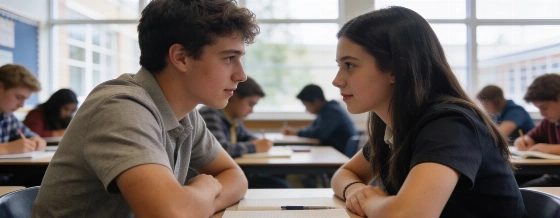
For many people with high intellectual potential, friendship is never casual. Intense loyalty, high standards, and a need for deep connection can leave them feeling isolated even in a crowd
In a small private school outside Chicago, principal Laura Bennett noticed a pattern among her students identified as having high intellectual potential. For these kids, friendship isn’t a casual bond or a matter of convenience. It’s an all-or-nothing commitment—one that can feel like a lifelong pact. Some say they’d cross the country for a friend, no matter the cost. This intensity isn’t just a quirk. It’s a defining feature of how many high-IQ individuals approach relationships, according to psychologists who specialize in giftedness.
Clinical psychologist Dr. Arielle Adda, who has spent decades working with gifted children and adults, explains that people with high intellectual potential—often defined by an IQ of 130 or above—tend to form fewer but much deeper friendships. Their minds are restless, sensitive to nuance, and drawn to complexity. As a result, they seek out connections that are intellectually and emotionally compatible, often from a young age. For them, a friend isn’t just someone to hang out with. It’s someone who shares their inner world, their passions, and their doubts.
This approach to friendship can be both a strength and a source of pain. Many high-IQ adults report feeling like outsiders, surrounded by acquaintances but lacking true friends. They reserve the word “friend” for relationships that meet their high standards of loyalty, honesty, and shared curiosity. When those standards aren’t met, the sense of betrayal or disappointment can be overwhelming. According to Psytheater.com, this pattern is not unique to the U.S.—it’s observed in gifted communities worldwide.
Intensity and Selectivity
For high-IQ individuals, friendship rarely happens by chance. It’s built on a foundation of shared interests, intellectual stimulation, and emotional resonance. These adults often gravitate toward people who can keep up with their rapid-fire thoughts and deep dives into complex topics. A book discussion, a debate about a fictional character, or a shared creative project can become the glue that binds them together. But this selectivity means their social circles are often small—sometimes just one or two close friends.
When a true connection forms, it can last for decades. But the flip side is that any breach of trust—a lie, a sudden withdrawal, or a perceived slight—can feel catastrophic. The emotional fallout isn’t just disappointment; it can trigger a crisis of belonging. Many gifted adults describe a persistent sense of being “on the outside looking in,” even when surrounded by people. This isn’t necessarily a sign of social dysfunction. Research shows that context and environment play a major role in how well high-IQ individuals adapt socially.
Finding Their People
When high-IQ adults finally meet others who share their pace and depth, the relief is palpable. In her school, Bennett sees students light up when they find peers who “get” them. Conversations flow without the need to slow down or explain every reference. The connection is immediate, and the sense of isolation fades. But these friendships remain rare and precious. Most gifted adults report having only a handful of close friends, if any.
Experts recommend seeking out environments where intellectual curiosity is valued—book clubs, science workshops, or organizations focused on giftedness. Forcing a high-IQ child or adult to “make more friends” can backfire, increasing anxiety and self-doubt. Instead, the focus should be on quality over quantity. If loneliness persists and leads to distress, anxiety, or bullying, mental health support can help clarify needs and build resilience.
When Friendship Feels Like a Test
The pressure to fit in can be intense, especially for gifted children and teens. Many feel caught between wanting to belong and refusing to lower their standards for connection. This tension can lead to social withdrawal or a sense of being misunderstood. As one recent feature on how social circles shape trust points out, having many acquaintances doesn’t always translate to feeling truly known or supported. For high-IQ adults, the search for authentic friendship is ongoing—and often complicated by their own expectations.
According to the National Association for Gifted Children, about 6% of U.S. students are identified as gifted, but many more go unrecognized. Studies show that gifted individuals are at higher risk for social isolation, anxiety, and perfectionism, especially during adolescence. Early identification and supportive environments can help mitigate these risks, but the need for deep, meaningful connection remains a lifelong challenge for many.
Giftedness is not a diagnosis, but it does shape how people experience the world. High-IQ adults often report heightened sensitivity, rapid thought patterns, and a drive for authenticity in relationships. These traits can make everyday social interactions feel exhausting or unsatisfying. Understanding the unique social needs of gifted individuals is crucial for parents, educators, and clinicians who want to support their well-being.