
Mosquito complaints are rising fast as summer heat arrives. Everyday watering habits may be fueling the problem, experts warn
As the first heat waves of 2026 hit much of the U.S., mosquitoes are showing up earlier and in greater numbers than usual. Reports of bites and buzzing are spiking, especially in neighborhoods where people are eager to enjoy their yards after a long winter. But while many blame nearby ponds or creeks, pest control specialists say the real culprit is often much closer to home—and much more ordinary.
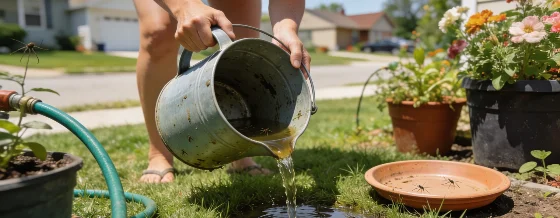
According to experts in the field, the way you water your garden can quietly create perfect breeding grounds for mosquitoes. It’s not just about obvious puddles or birdbaths. Even a poorly drained watering can, a kinked hose, or a forgotten saucer under a flowerpot can hold enough stagnant water for hundreds of mosquito eggs. These hidden pockets are easy to overlook, but they’re exactly what mosquitoes need to multiply fast.
Take the classic watering can. After use, a small amount of water almost always remains at the bottom. Unless you tip it out and store it upside down, that leftover water can become a mosquito nursery in just a few days. The same goes for hoses left stretched out on the ground—if they’re not fully drained and coiled, water can pool inside, out of sight. And after a heavy watering, the trays under potted plants can collect runoff. If that water sits for more than three days, it’s a magnet for egg-laying mosquitoes.
Gutters are another overlooked risk. Leaves and debris trap moisture, creating a mix of organic matter and standing water that’s irresistible to insects. Cleaning gutters twice a year—once in spring, once in fall—can make a real difference. Without this maintenance, even a small blockage can turn your roofline into a mosquito hotspot.
Of course, not every factor is under your control. If you live near a marsh, lake, or slow-moving stream, mosquitoes will always be part of the landscape. But as pest management professionals point out, the single most effective step you can take is to eliminate standing water wherever you find it. That means checking every corner of your yard, not just the obvious spots.
Health authorities recommend a few simple but effective strategies: wear loose, long clothing during peak mosquito hours; use EPA-approved repellents, especially if you’re in a high-risk area; install window screens or bed nets; and run a fan outdoors, since moving air disrupts mosquito flight. But above all, make a habit of dumping out any water that collects in containers, trays, or garden tools. Even a bottle cap’s worth can be enough for a new generation of pests.
It’s also worth noting that mosquitoes are drawn to carbon dioxide and body heat, not just water. Strong perfumes and scented lotions can make you more attractive to them, so consider skipping sweet-smelling products if you’re spending time outside. While you can’t change the climate or your proximity to natural water sources, you can cut down on the number of mosquitoes breeding right outside your door.
Based on information from Top Santé.
Understanding mosquito behavior is crucial for effective prevention. Mosquitoes lay eggs in stagnant water, and their rapid life cycle means that even small amounts can lead to a surge in population within days. Public health campaigns often focus on community-wide efforts to remove standing water, but individual vigilance is just as important. In areas where mosquito-borne illnesses like West Nile virus or Zika are a concern, these small daily actions can have a real impact on both comfort and safety.