Chasing viral plank challenges can backfire. Experts say just a few focused sets each day can build core strength and protect your back—if you know when to stop and how to progress safely
Scrolling through social media, it’s easy to think that holding a plank for several minutes is the gold standard for core strength. But for most people, chasing these viral records is more likely to lead to back pain than visible results. The real question isn’t how long you can grit your teeth and hold on—it’s how much quality time you spend in good form, and how consistently you do it.
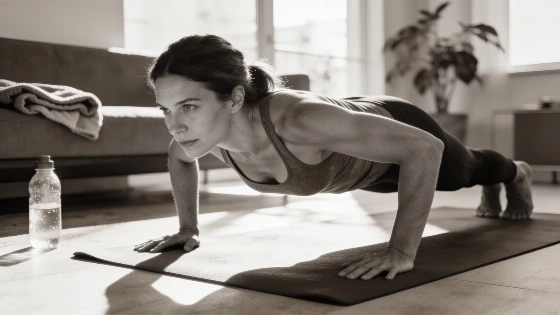
Physical therapists and sports medicine doctors agree: a handful of well-executed sets, even if each lasts only 10 to 20 seconds, will do more for your core than a single marathon plank. The key is maintaining a neutral spine, steady breathing, and proper alignment—shoulders over elbows, hips level, neck in line with your back. As soon as your hips sag, your shoulders round, or your breath locks up, it’s time to stop. For most beginners, aiming for a total of 60 seconds per day, split into three or four sets, is both realistic and effective. Over time, you can build up to 90 or even 120 seconds total, but the focus should always be on form, not the stopwatch.
According to Harvard Medical School and the National Academy of Sports Medicine, the moment your alignment breaks down is your true stopping point. Forcing yourself to keep going past that risks straining your lower back and shoulders. Instead, drop to your knees or take a break, then reset and try again. This approach not only protects your spine but also helps you build the kind of core stability that translates to better posture and less fatigue in daily life.
Progress looks different depending on your starting point. Beginners might start with three or four sets of 10–20 seconds, every other day. Intermediate exercisers can aim for three sets of 30–40 seconds, three to five days a week. Advanced athletes may work up to three sets of 45–60 seconds, then add variations like side planks or single-arm holds instead of simply increasing time. The French Surfing Federation, among others, recommends this cumulative approach for both safety and results.
Noticeable improvements in core endurance and posture typically show up after four to six weeks of regular practice. A randomized trial at the University of Novi Sad found that adults who followed a six-week plank program gained significant core endurance and better postural alignment compared to those doing other lumbar exercises. Another study published in the International Journal of Health Sciences and Research in 2026 reported that participants who planked three times a week for six weeks improved their stability scores on the Sahrmann core stability test more than those in other groups.
In daily life, these gains mean you’re less likely to slouch at your desk, feel wiped out after standing for long periods, or experience certain types of back discomfort linked to weak core muscles. But if your goal is visible abs, you’ll need to combine planks with cardio, varied strength training, and a nutrition plan—planks alone won’t burn off abdominal fat. The American College of Sports Medicine also stresses the importance of breathing steadily during planks and stopping immediately if you feel sharp pain in your back, shoulders, or wrists. If you’re unsure about your form, working with a professional can help you avoid injury and get more from your efforts.
Building a sustainable fitness habit often means tuning out the noise of extreme challenges and focusing on what actually works for your body. As research shows, genuine progress comes from consistency and attention to technique, not from pushing past your limits for the sake of a viral trend. This is true in other areas of well-being as well—sometimes, as discussed in this look at the real impact of authentic kindness on stress, it’s the quality of your actions, not the quantity, that matters most.
According to Top Santé, most people see measurable improvements in core strength and posture within a month or two of regular plank practice. In a 2026 study, participants who performed planks three times per week for six weeks increased their core stability scores by an average of 18%, while those using other lumbar exercises improved by just 9%. These numbers highlight the efficiency of short, focused plank sessions over drawn-out endurance holds.
Core stability is a foundational element in physical therapy and sports medicine. It refers to the ability of your trunk muscles—especially the deep abdominals and spinal stabilizers—to keep your spine and pelvis aligned during movement. Strong core stability not only reduces the risk of back pain but also improves balance, athletic performance, and everyday function. Many rehabilitation programs now include planks and similar exercises as a standard part of treatment for both injury prevention and recovery.