Vibration platforms are trending on social media, promising quick muscle tone and fat loss with minimal effort. But do these machines actually deliver results, or are the claims just hype
Scroll through TikTok or Instagram and you’ll see influencers standing on vibrating platforms, promising a flatter stomach and stronger muscles in just minutes a day. These machines aren’t new, but their popularity is surging again—especially at home and in boutique gyms. The real question: can a few minutes on a vibration platform actually help you lose weight or get stronger?
Experts say the science is more nuanced than the viral videos suggest. Vibration platforms work by sending rapid pulses through the body, causing muscles to contract and relax dozens of times per second. This reflexive activation can improve muscle tone, strength, circulation, bone density, and balance. However, any meaningful weight loss depends on pairing the platform with a healthy diet and regular exercise. According to Psytheater.com, the machines alone are not a shortcut to a leaner body.
How Vibration Platforms Work
Standing or holding a plank on a vibration platform forces your body to stabilize itself against constant, unpredictable movement. Some models vibrate up to 50 times per second in multiple directions. This instability triggers unconscious muscle engagement, activating more fibers than standing on solid ground. Research in older adults has shown improvements in muscle strength and mass, with some studies suggesting potential to slow age-related muscle loss.
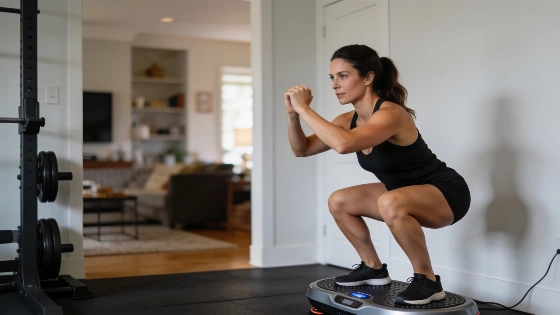
But the benefits aren’t automatic. The most significant gains come when users perform squats, lunges, push-ups, or planks on the platform, rather than just standing still. Active movement maximizes muscle recruitment and calorie burn. Simply standing may help with circulation and balance, but won’t replace traditional strength training.
Weight Loss: Hype vs. Reality
Despite bold marketing, vibration platforms are not a magic bullet for fat loss. A 2025 meta-analysis in the International Journal of Obesity reviewed 20 randomized trials with 585 participants. When used alone—without calorie restriction or other exercise—vibration training did not produce significant reductions in weight, body mass index, or body fat, including visceral fat. The energy expenditure from vibration is modest compared to brisk walking or cardio classes.
That said, for people who struggle with joint pain, obesity, or limited mobility, vibration platforms can be a gateway to more movement. When combined with a calorie deficit and other forms of exercise, they may help certain groups—especially older adults—improve muscle tone and overall activity levels. But the visible changes in body composition only appear when the platform is part of a broader healthy lifestyle.
Safety, Duration, and Who Should Avoid
Most experts agree vibration platforms are not a replacement for traditional workouts. The benefits are modest, and safety matters. Beginners should start with a few minutes at low intensity, gradually increasing to 15–20 minutes per session, never exceeding 30 minutes. Some people should avoid these machines or consult a doctor first: those who are pregnant, have heart or circulation problems, recent surgery, severe osteoporosis, herniated discs, joint pain, or balance disorders.
For those who want to maximize results, active exercises on the platform—like squats or planks—are key. Passive standing offers limited benefit. And while the machines can support balance and circulation, they’re not a cure-all. As with any fitness trend, realistic expectations and a holistic approach matter most.
Sleep and recovery also play a role in muscle health and weight management. For example, research has shown that certain sleep positions can impact digestion and nighttime reflux, as discussed in this recent article on sleep posture and acid reflux.
According to the U.S. Centers for Disease Control and Prevention, only about 24% of American adults meet the recommended guidelines for both aerobic and muscle-strengthening activity. The fitness equipment market, including vibration platforms, has grown rapidly in recent years, but experts caution that no device can replace the fundamentals: consistent movement, balanced nutrition, and adequate rest. For those considering a vibration platform, it’s best viewed as a supplement—not a substitute—for proven exercise routines.