
Hours at a desk can tighten the neck and back. A short chair-based practice uses supported poses and breathing, with no floor work or deep flexibility required.
Check the chair before you begin: it should be firm and stable, with no wheels.
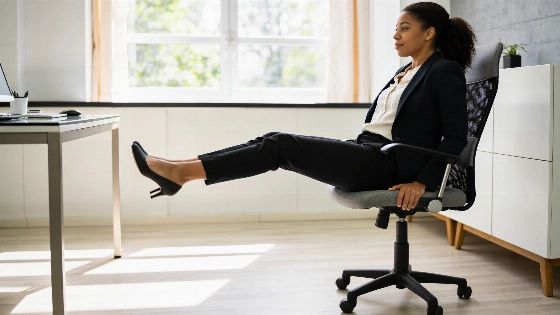
Used as a steady prop, a desk chair can help with balance and stretches without requiring you to get down on the floor. Even 15 minutes of movement may interrupt the stiffness that builds during long hours at a screen.
The aim is modest. Give the body a chance to move and the mind a chance to slow down. Desk work can leave the eyes and jaw tense. It can also tighten the shoulders, neck or back. Short, regular sessions offer one practical way to break up long spells of stillness.
In a randomized study of 131 older adults with lower-extremity osteoarthritis, chair-yoga classes lasted 45 minutes, twice a week, for eight weeks. Participants in the yoga group reported greater reductions in pain and pain-related interference with daily life, with the pain-interference effect lasting about three months after the program ended.
Chair yoga retains the broad elements of traditional yoga. Fleur Houdré-Grégoire, a certified yoga teacher, says a chair-based practice can include poses and breathing exercises. It can also include meditation. The chair changes how a pose is done, but moving with care still matters.
The evidence has limits. The study involved older adults with osteoarthritis, not healthy office workers, so it does not establish that a 15-minute session relieves workplace stiffness. Fatigue and walking speed improved during the trial, but those effects did not last after the program ended, according to the chair-yoga trial summary.
A stable chair can offer support to people with limited mobility. Older adults and people with physical disabilities may also find it useful. Athletes easing back after an injury can use the chair for balance, then adjust each pose to suit their needs.
“Chair yoga” does not mean every move happens while seated. Depending on a person’s health and any movement restrictions, the chair can support more active poses and even inversions.
A lunge can use the chair for balance. A twist can use its back as a gentle point of support.
In a warrior pose, resting the front thigh on the seat can make the position easier to hold.
Short movement breaks can help interrupt long stretches of sitting, but they are not a substitute for regular physical activity. They should be considered one part of an active routine, not a replacement for weekly aerobic and strength exercise.
A short morning movement routine offers another way to add activity to the day. At a desk, the chair is already within reach, which can make a brief pause easier to fit in.
Regular practice can work on joint range. It can also challenge balance and coordination. Stretches through the back bring more of the body into the session, while poses that open the hips and chest add movement elsewhere.
The chair is a tool, not a guarantee of safety or a cure for ongoing pain. Anyone with a health condition or a movement restriction should adapt the poses to their needs and avoid pushing through discomfort.
Breathing is part of the practice. Pair a slow breath with a measured stretch to keep a brief session from feeling rushed. The goal is to notice how the body moves, not to force flexibility. Stop if a pose feels wrong.
The World Health Organization recommends limiting sedentary time and replacing it with movement of any intensity, including light activity. Its guidance calls for 150–300 minutes of moderate-intensity aerobic activity or 75–150 minutes of vigorous activity each week, as outlined in this WHO activity guidance summary.