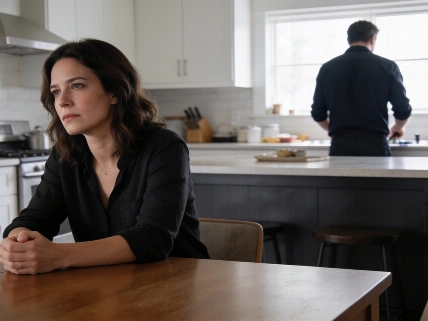

If your partner’s jokes in public always target you, the impact can go far beyond embarrassment and start to erode trust and safety in your relationship
It starts as a laugh at your expense. Maybe your husband cracks a joke about your forgetfulness or fumbles in front of friends. The group laughs. You force a smile, but inside, you’re shrinking. You’ve told him it hurts. He brushes it off—“You’re too sensitive, it’s just humor.” But the dread before every social event grows. You brace for the next punchline, knowing it will likely land on you.
According to Psytheater.com, this isn’t harmless teasing. When jokes consistently target one partner, especially in public, it’s less about fun and more about power. In healthy relationships, humor is mutual—both people play, both people laugh, and both feel safe. When only one person is the butt of the joke, the dynamic shifts. The relationship’s sense of safety erodes. If you find yourself anxious before gatherings, that’s a sign your emotional boundaries are being crossed.
It’s easy to dismiss a single offhand comment. But when the pattern repeats, the message is clear: your feelings don’t matter as much as his need for attention. The phrase “you’re too sensitive” is a classic way to invalidate someone’s experience. It shifts the blame from the person making the joke to the person feeling hurt. Over time, this can chip away at self-esteem and trust. The real damage isn’t the joke itself—it’s the refusal to acknowledge your discomfort.
When a partner uses your quirks or mistakes as material, he’s signaling superiority to the group. He gets the laughs, you get the sting. It’s a subtle form of public shaming, and it can make intimacy and respect hard to maintain. If you start to question whether you even want to be in a relationship where you’re the punchline, that’s not overreacting. It’s a rational response to chronic disrespect.
Some people worry that pushing back will only make things worse. If you snap or show your hurt, you risk being labeled “dramatic” or “no fun.” So you stay quiet, and the cycle continues. But silence only protects the status quo. Instead, calmly interrupt the pattern. After a joke at your expense, say—without anger—“What’s funny about that for you? I’m glad everyone’s having fun, but I’m not.” This isn’t about shaming him in return. It’s about making your discomfort visible, so the group can see the cost of his humor.
Have the real conversation in private, not in front of others. Spell out your boundaries: “I want to talk about your jokes in front of friends. You know they bother me, but you keep doing it. Maybe you think it’s harmless, but I feel humiliated. It’s making it hard for me to feel close to you.” Watch his reaction. Is he willing to listen and change? Or does he double down? His response will tell you whether he values your comfort more than his moment in the spotlight.
It’s worth noting that emotional withdrawal can be just as damaging as public ridicule. If your partner shuts down instead of engaging, the relationship can feel just as lonely. For more on how emotional distance shapes couples, see this discussion of living with a partner who emotionally withdraws.
Ultimately, the issue isn’t about being able to “take a joke.” It’s about whether your partner respects your boundaries and cares about your emotional safety. If he keeps crossing the line after you’ve made yourself clear, you’re not being too sensitive—you’re noticing a real problem.
In therapy, these patterns are often explored through the lens of boundaries and emotional safety. Couples counseling can help partners recognize when humor becomes a weapon rather than a bridge. Therapists may work with both people to rebuild trust, teach assertive communication, and help each partner understand the impact of their words. The goal isn’t to eliminate laughter, but to make sure it brings people closer instead of driving them apart.