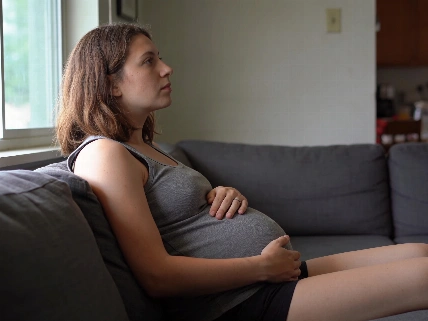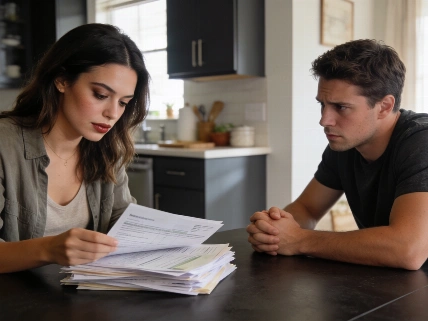

Many women report feeling alone in marriage despite sharing a home and daily life with their spouse. Emotional distance, lack of support, and fading intimacy can leave partners questioning what happened to real connection.
There comes a point in some marriages when the relationship starts to feel more like a business arrangement than a partnership. You share a bed, a mortgage, maybe children, but the sense of being truly connected has faded. The phrase "I have a husband but no man by my side" isn’t just a clever complaint—it’s the reality for many women who feel emotionally alone in their own homes.
When someone says their husband is there but the man is missing, it’s not about physical absence. It’s about the daily routine—who gets groceries, who pays the bills—taking over, while intimacy and warmth quietly disappear. Conversations shrink to reminders and to-do lists. When stress hits, you’re left to handle it alone. Evenings pass in the same room, but it can feel like you’re living separate lives.
In 2023, the United States recorded 672,502 divorces, with a national divorce and annulment rate of 2.4 per 1,000 people—one of the few recent public benchmarks for marital stability.
The reasons for this distance are rarely simple. Sometimes it’s years of small resentments and disappointments that build up until they form a wall. Sometimes it’s a mismatch in how each partner shows love—one wants words and touch, the other thinks actions are enough. Add in work, parenting, and money worries, and it’s easy to see how connection gets lost. For some, shifting family roles—like one partner taking on most of the housework or childcare—can quietly push the other aside, leading to frustration and detachment.
But it’s not always about the other person. In a world full of distractions, many people have lost the habit of real conversation. We stick to surface-level talk, avoid being vulnerable, and hope our partner will just "get it" without us having to say what we need. Both people end up waiting for the other to make a move, and the loneliness grows.
Signals and consequences
There are warning signs when a marriage slips into emotional autopilot. If you can’t remember the last real conversation that wasn’t about chores or schedules, that’s a red flag. If you feel invisible when you’re struggling, or if affection and small gestures have disappeared, the relationship is running on empty. Over time, this can erode self-esteem, build resentment, and even lead to infidelity or divorce.
Recent analyses in the Netherlands reveal a significant rise in divorces among couples aged 60–70 and older: from 8.2% of all divorces in 2015 to a projected 13.4% in 2025, highlighting the growing issue of 'quiet separation' in long-term marriages.
According to Psytheater.com, these patterns are common. Many couples get stuck in a loop of pulling away from each other, each convinced the other is the problem. The longer this goes on, the harder it is to break the silence. As previous reporting shows, unmet emotional needs can quietly destroy even long marriages.
But the answer isn’t just "talk more." Communication matters, but so does the willingness to be vulnerable. It takes courage to say, "I feel alone with you," or "I miss how we used to be." It also takes effort to make time for each other, even when life is busy. Couples who manage to reconnect often start with small changes—putting away devices, planning a real date night, or simply listening without judgment.
Breaking the cycle
If you see yourself in this pattern, the first step is to look inward. When was the last time you showed gratitude or affection without expecting anything back? Have you told your partner what you need, or are you hoping they’ll guess? Moving from blame to honest self-reflection can open the door to change.
Direct, non-accusatory language helps. Instead of "You never care about me," try "I feel disconnected and want us to find our way back." Setting aside regular time together—without screens or distractions—can help rebuild trust and intimacy. Practicing active listening, where each person speaks without interruption, can break old habits of criticism and defensiveness.
Sometimes, the gap is too wide to bridge alone. In those cases, working with a couples therapist can help. Therapy isn’t a magic fix, but it can give partners new ways to communicate and reconnect. The willingness to seek help is itself a sign that the relationship matters.
If the loneliness doesn’t go away, even while sharing a life, it’s a signal that shouldn’t be ignored—not just for the marriage, but for your own well-being. Emotional neglect isn’t a minor issue; it can slowly leave both partners feeling lost. The good news is that even small changes in how you show up for each other can help restore a sense of partnership. Waiting for the other person to change rarely works. Real connection starts with naming what’s missing and being willing to do something about it.
Couples therapy is one way to rebuild emotional intimacy. Approaches like Emotionally Focused Therapy (EFT) and the Gottman Method focus on breaking negative cycles, improving communication, and restoring trust. These therapies emphasize vulnerability, active listening, and shared rituals. Not every relationship can or should be saved, but with the right support, many couples find it’s possible to move from silent coexistence back to real connection.
Modern reviews of couples therapy show that "success" isn’t a single number: studies often report that about 60–72% of couples see noticeable improvement or recovery after treatment. In clinical practice, around 48% of couples fully restore their relationship, about 18% see significant improvement without full recovery, around 21% see no change, and roughly 13% experience deterioration. The average effect size of therapy in reviews is estimated at 0.84, according to an Energetics Institute analysis.