

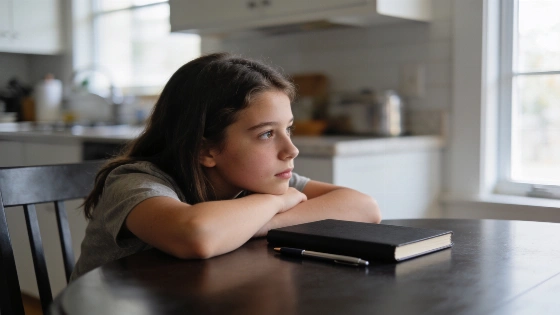
A young woman describes years of compulsive pacing and self-hitting during emotional surges. A psychiatrist explains why these behaviors demand urgent attention and what steps can actually help.
Emily, 18, can’t sit still when her feelings get too strong. She paces for hours, tracing the same path, sometimes with music, sometimes in silence. Her hands move. She talks out loud, but no one is there. This isn’t just a habit. It’s a ritual that takes over her day.
She started at 12. At first, walking in circles helped her handle big emotions—joy, anger, anxiety. But the pattern changed. Now, when things get intense, she hits the back of her head or pulls her hair. She can’t stop, even when it hurts. Shame follows. The relief never lasts.
Self-harm in the form of hitting oneself or pulling out hair is typically classified as non-suicidal self-injury (NSSI) and is often linked to anxiety, depression, eating disorders, or borderline personality disorder in young people.
Compulsive movement, talking to yourself, self-harm—these aren’t harmless quirks. Psychiatrists say they often point to trouble with handling emotions or controlling impulses. The urge to hurt yourself, called self-injurious behavior or auto-aggression, is usually a desperate way to manage pain inside. For some, physical pain drowns out emotional chaos. But it’s only for a moment. The risk grows over time.
Emily’s case stands out because she loses control. When self-hitting becomes automatic, and she keeps going despite pain or embarrassment, it’s no longer just a coping tool. It’s a warning sign. Psychiatrists say this should never be brushed off as a phase or left to online advice. Sometimes, hospital care is needed to keep someone safe and start real treatment.
Getting help isn’t easy. Stigma, confusion, or hope that things will just get better often block the way. Many families and young people avoid seeing a psychiatrist. They fear labels. But as reported earlier, waiting for a crisis only makes things worse. Early help—face-to-face with a psychiatrist or therapist—can reveal what’s really going on. It opens the door to therapy, medication, or both.
Experts in child and adolescent psychiatry emphasize that in-person assessment is crucial for self-injury: a clinician must determine the underlying cause and distinguish NSSI from other conditions such as trichotillomania and excoriation disorder.
Emily wants answers. That matters. Noticing that a pattern is painful and disruptive is the first step. But it’s not enough. When self-harm becomes routine, seeing a professional isn’t optional. It’s urgent. The right diagnosis can tell the difference between obsessive-compulsive patterns, trauma, mood disorders, or something else. Each needs its own plan.
If you see these signs—compulsive rituals, self-injury, losing control—in yourself or someone close, act now. Don’t wait for things to spiral. Reach out to a mental health professional, even if the behavior seems strange or hard to explain. Noticing and caring is not weakness. It’s the start of real recovery. Silence is not strength. Asking for help is.
Self-injury is complicated. It can overlap with obsessive-compulsive disorder, mood problems, or trauma. Treatment might mean cognitive behavioral therapy, dialectical behavior therapy, or medication. It depends on the cause. Family support and clear information help. So does a nonjudgmental doctor. Books like "The Body Keeps the Score" by Bessel van der Kolk and "Everyday Mental Disorders" by Anastasia Dolganova give a deeper look at what recovery feels like. Early help works best. It stops things from getting worse and gives people back control.
Psychiatric research says self-injury is often a short-term fix for emotional pain. It can lower the intensity of feelings, break through numbness, or show distress without words. A Frontiers in Psychiatry review says emotional dysregulation is a key part of NSSI. Self-harm is described as a poor way to cope with strong emotions and trouble understanding or managing them.