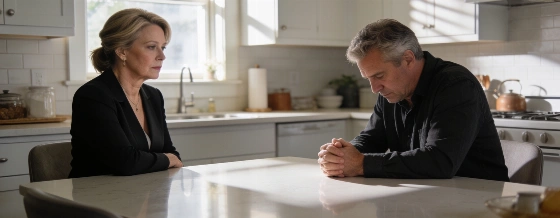
A man in his late fifties faces the fallout of falling in love with a much younger woman and must decide how to tell his wife he wants to leave after decades together
Realizing you want to leave your marriage for someone else doesn’t arrive gently. It hits hard, and the impact can undo decades of shared life in a single moment. For one man, that moment came at 59, when he met a graduate student thirty years younger and felt convinced he’d found something he hadn’t felt in years. The excitement of new love, the sense of being noticed again—these are strong pulls. But they don’t erase the reality of a spouse at home, a long history, or the pain that comes with breaking a bond built over years.
What brings someone to this point? Sometimes it’s the rush of new infatuation. More often, it’s the slow fading of connection in a marriage that’s been quietly coming apart for a long time. The question isn’t just how to tell your partner you want to leave—it’s whether you’re chasing something real or just running from what’s grown empty. Psytheater.com notes that the urge to escape can feel overwhelming, but the aftermath is rarely as simple as it seems in your head.
Contemporary psychological research suggests that the end of long-term relationships is more often caused by gradual emotional distancing and loss of curiosity about one another, rather than a sudden new romance.
There’s no script for telling your spouse you don’t love them anymore. No words will make it painless. The idea of a gentle breakup is just that—an idea. Even with care, the conversation will hurt. The only way through is to be direct: a private, honest talk, with respect and a willingness to face the fallout. Trying to soften the blow only drags out the pain for everyone.
Before you say anything, it’s worth asking yourself what’s really driving you. Is this about the new person, or about what’s missing in the old relationship? Are you sure the marriage is over, or are you hoping the excitement of someone new will fix deeper problems? If you’re not certain, it’s not time for confessions—it’s time to pause and reflect. Acting on impulse can have lasting consequences that go far beyond the first shock.
Leaving a long marriage isn’t just about ending a relationship. It means taking responsibility for your choices, your happiness, and the pain you might cause. It means facing your partner’s anger, sadness, or disbelief, and not backing away when things get hard. Some people find courage by remembering the good that once existed, using those memories to end things with dignity. Others freeze, stuck in guilt and fear, and end up living double lives that damage trust on all sides.
Recent analyses highlight that the urge to leave a marriage is often linked to the fading of limerence—the initial romantic euphoria—rather than the abrupt emergence of a new relationship. This process is typically gradual, involving emotional exhaustion and a chronic lack of reciprocity.
There’s no shortcut to handling this well. Emotional maturity means owning your decisions, even when they hurt. It means seeing your spouse as a person with their own feelings, not just an obstacle. The only way forward is honesty, even when it’s uncomfortable, and accepting that there’s no perfect way out. If you’re still unsure, that’s a sign to wait. Only when you’re certain—and ready to live with the outcome—should you take the final step.
For anyone in this kind of turmoil, the urge to avoid pain is normal. But as reported earlier, dodging hard conversations only makes things worse. The real work is facing the truth, not just for your partner, but for yourself. In the end, honesty is the only way to move forward without regret or unfinished business.
Emotionally Focused Therapy (EFT) is one approach that can help couples and individuals work through the aftermath of infidelity, emotional distance, or the end of a long relationship. EFT focuses on understanding attachment needs and emotional responses, helping people see the patterns that keep them stuck. No therapy can erase the pain of a breakup, but working with a good therapist can clarify motives, build resilience, and support better decisions—whether that means repairing a marriage or moving on with integrity.