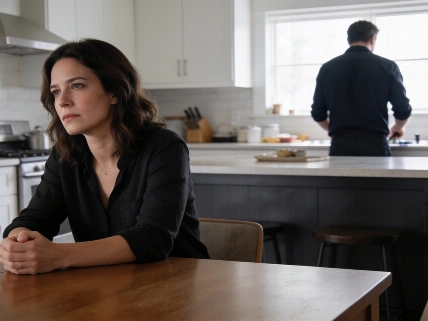

After nearly 20 years of marriage, a woman faces her husband’s job loss, rising aggression, and the fear that divorce will leave her alone with two kids and no support
After almost two decades of marriage, Linda, 55, finds herself at a breaking point. Her husband, 51, has been out of steady work for years. His health is shaky, his mood swings are sharper, and his drinking has crept up. The couple lives in a small Midwestern town, where jobs are scarce and support networks thin. Linda has spent most of her adult life as a stay-at-home mom, caring for two children who struggled with chronic illness. Now, as her husband’s frustration turns to anger and blame, she wonders if divorce would bring relief—or just more hardship.
Financial stress is the backdrop to every argument. Linda’s attempts to encourage her husband to take work out of town have failed; he lasted two weeks on a job before illness sent him home. He now accuses her of wanting him gone, twisting her efforts into evidence of betrayal. The latest fight ended with him threatening to leave, or demanding that she be the one to move out. He even suggests he could take the kids, since he’s still able to earn something. The children, both under 18, are caught in the crossfire, absorbing their father’s anger and his harsh words about their worth.
Linda’s fear is not just about being alone. She worries that divorce would hand her husband a kind of freedom—he recently inherited an apartment from his father, which he could sell and use to leave the country. Meanwhile, she would be left with two kids, no job, and little hope of finding work at her age and with her own health issues. The prospect of starting over feels overwhelming, and the emotional toll is visible in every line of her story.
According to Psytheater.com, situations like Linda’s are more common than many realize. When one partner becomes emotionally or financially dependent, the other often feels trapped by responsibility and guilt. The dynamic can resemble a parent-child relationship, with the dependent partner using threats or emotional outbursts to maintain control. In Linda’s case, her husband’s talk of leaving or selling his inheritance may be less about real plans and more about manipulating her fear of abandonment. Research shows that in the U.S., nearly 30% of divorces among couples over 50 involve significant financial or health-related stressors, and women in these situations are more likely to face poverty after separation.
Linda’s best move, experts say, is to focus on regaining some independence—starting with work. Even a modest job can provide not just income, but a sense of agency and connection outside the home. Local job centers and online resources can help older adults re-enter the workforce, even after long gaps. This step is crucial whether she stays married or not. It also models resilience for her children, who need stability and reassurance as much as financial support. While it’s important to shield kids from their father’s anger, experts caution against turning them against him. Instead, Linda can help them understand that their father’s behavior is about his own struggles, not their value as children.
Family crises like Linda’s rarely have simple solutions. But as this analysis of hidden patterns in marriage shows, cycles of blame and dependency can quietly erode even long-standing relationships. Breaking the cycle often means shifting focus from the partner’s actions to one’s own next steps—however small or daunting they may seem.
Divorce and separation are among the most stressful life events, especially for women over 50. According to the U.S. Census Bureau, the divorce rate for Americans aged 50 and older has doubled since the 1990s. Women in this age group are more likely to face economic hardship post-divorce, with nearly 27% living below the poverty line compared to 11% of men. Access to legal aid, social services, and community support can make a significant difference in outcomes for women navigating late-life divorce and single parenthood.