
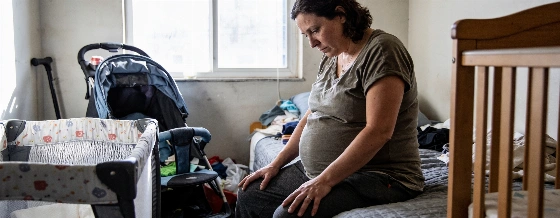
A college student discovers she’s pregnant, her boyfriend demands an abortion, and her mother’s past warnings leave her isolated and unsure where to seek support
When you’re 20, still in college, and suddenly staring down a positive pregnancy test, the world can shrink fast. For Emily, a sophomore at a Midwest university, the news came out of nowhere. She and her boyfriend hadn’t planned for this, and his reaction was immediate: he insisted abortion was the only rational choice. He called from his job out of state, repeating the same message—end the pregnancy, move on. The distance between them grew with every call.
Emily’s heart didn’t offer clear answers. She felt numb, then anxious, then angry. The man who once talked about building a future together now seemed like a stranger, more focused on logistics than on her. She couldn’t bring herself to tell her mother. Her mom had always said, “Never have your first abortion. You’ll regret it forever.” That warning echoed in her mind, making the idea of confiding in her family impossible. The isolation was total.
According to Psytheater.com, young women in crisis pregnancies often find themselves caught between partners who withdraw and families whose values make honest conversation risky. The pressure to make a decision—quickly, quietly, and alone—can be overwhelming. Emily’s story is not rare. Many women in their late teens and early twenties report feeling abandoned by partners and unsupported by parents when facing an unplanned pregnancy. The emotional fallout can include anxiety, shame, and a sense of being trapped by circumstances beyond their control.
In moments like these, the search for support becomes urgent. Friends may offer a listening ear, but their advice can be colored by their own fears or beliefs. Professional counseling, whether on campus or through community clinics, can help clarify options and provide a space to process the emotional storm. Sometimes, the most valuable support is simply someone willing to sit with you in the uncertainty, without judgment or agenda. As one recent feature on family tension and parental expectations noted, even close relationships can feel unsafe when old patterns and unspoken rules dominate—see this exploration of how fear of upsetting a parent can shape adult decisions.
For Emily, the next steps are unclear. She’s weighing her resources, her values, and the reality that her life will change no matter what she chooses. Experts recommend making two lists: one for the challenges and supports involved in ending the pregnancy, another for those involved in continuing it. This exercise can help clarify what’s at stake and where help might come from. No decision will erase the complexity or the pain, but mapping out the landscape can make the unknowns less paralyzing.
National data from the Guttmacher Institute shows that nearly 60% of women seeking abortions in the U.S. are in their twenties, and about 75% cite financial instability or lack of partner support as key reasons. College students face unique barriers, including fear of academic disruption, loss of housing, or family backlash. Access to confidential counseling and reproductive health services varies widely by state and campus, making local resources critical for those navigating these decisions.
Unplanned pregnancy in young adulthood is rarely just a medical event. It’s a collision of relationships, values, and the limits of support. For those caught in the middle, the path forward is rarely obvious—but it is theirs to choose.
Family dynamics play a powerful role in how young adults handle crisis pregnancies. Research in developmental psychology highlights that parental attitudes toward sex, pregnancy, and abortion can shape not only a child’s beliefs but also their willingness to seek help when it matters most. Open, nonjudgmental communication within families is linked to better mental health outcomes and more adaptive decision-making in times of stress. For those without that safety net, building a support system—through friends, mentors, or professionals—can be a lifeline.