
Many adults recall an aggressive father and a self-sacrificing mother, but is this split narrative accurate—or does it hide deeper family wounds and patterns that repeat across generations
In therapy offices across the country, a familiar story emerges: the father as the aggressor, the mother as the long-suffering protector. Clients often describe their childhoods in stark terms—dad as the monster, mom as the saint. But this black-and-white framing rarely matches the full reality. Can a mother who allows herself and her children to be mistreated truly be called ideal? What keeps her in a destructive relationship, and who actually benefits from her sacrifice?
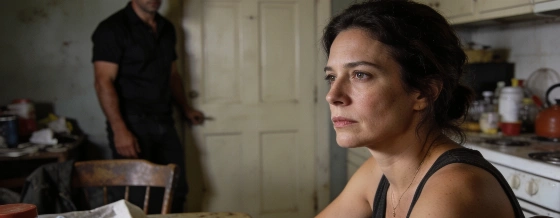
Most often, the answer is “the kids.” Mothers say they stay for their children’s sake. But does this really serve the children? One client remembers his father hacking at a locked door with an axe while he and his mother cowered in fear. Another recalls a home where the only food was onions, because his father drank away every paycheck. These stories are not rare. And in cases of sexual abuse, the question becomes even more urgent: where was the “ideal” mother when her child needed protection?
According to Psytheater.com, the myth of the perfect, selfless mother often masks a deeper emptiness. For some women, enduring pain and hardship becomes a way to prove their worth—especially when compared to a partner cast as the villain. This dynamic is reinforced by family scripts passed down for generations, where suffering is seen as virtue and breaking from tradition feels like betrayal. The fear of being cast out by one’s family—of not belonging—can be so strong that it overrides the instinct for self-preservation.
Both parents, then, are shaped by inherited patterns. The father’s aggression and the mother’s passivity are not simply personal failings, but learned roles. Changing these patterns means confronting the fear of being different from one’s ancestors—a fear that can feel like a threat to survival itself. Yet, as more people seek therapy, they begin to question these inherited beliefs and consider new ways of relating to their parents and themselves.
Breaking the Cycle
Therapy offers a path to separate from destructive family scripts without rejecting one’s parents as people. This process—called individuation or separation—means letting go of harmful beliefs while still recognizing your parents as your parents. As you do this, your view of them shifts. You may start to see your father not as a monster, but as a deeply wounded man who adopted destructive coping strategies. Your mother, too, was once a child, shaped by her own need to be “good” at any cost.
It’s a painful realization: both parents are products of trauma, not just perpetrators or victims. And crucially, only they can heal their own wounds. Your job is not to fix them, but to set boundaries and build your own life. This often involves expressing anger—not just at the father’s violence, but at the mother’s failure to protect. Psychologists recommend doing this in imagination or in therapy, where it can fuel real change without harming anyone.
Accepting both parents as flawed, complex people is a step toward wholeness. After all, you were created by two individuals. Rejecting one or idealizing the other keeps you stuck in old patterns. The path to change is long and difficult, but it begins with seeing your family clearly—and choosing which parts of their legacy you want to carry forward.
Generational Patterns
Research shows that family roles and beliefs are often transmitted unconsciously. A 2022 study in the Journal of Family Psychology found that children exposed to parental conflict are more likely to repeat similar patterns in their own relationships, even when they consciously reject their parents’ behavior. Breaking these cycles requires not just insight, but active effort—often with professional support.
For those struggling with the legacy of a divided family, resources like therapy, support groups, and psychoeducation can help. As explored in this discussion of how children process adult unhappiness, open conversations and honest reflection are key to healing and growth. The work is ongoing, but each step away from inherited pain is a step toward a healthier future.
Family therapy is one of the most effective approaches for addressing entrenched patterns of aggression, passivity, and emotional neglect. According to the American Association for Marriage and Family Therapy, over 75% of clients report improved family functioning after participating in structured sessions. These interventions focus on communication, boundary-setting, and recognizing the impact of generational trauma. While individual therapy can help with personal healing, family-based approaches are often necessary to shift long-standing dynamics and prevent the repetition of harmful roles in future generations.