

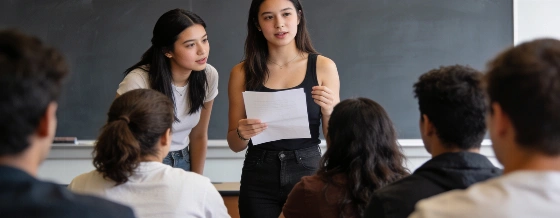
A student leader watches a classmate step in and chip away at her authority. Clinical insight shows what drives this rivalry—and how to respond without losing yourself.
It starts small. You set up a group game to bring everyone together. A classmate steps in and takes over halfway through. You try to stay polite, thank her for the "help," but it stings. Next, she solves a problem you missed—she finds the latest textbook updates before you even know there’s an issue. Suddenly, your role as class leader feels shaky. You wonder if you’re being pushed out of your own job.
This isn’t just college drama. It’s a real look at how fights for leadership can get personal, especially when it’s hard to tell the difference between helping and overstepping. Psytheater.com points out that these moments say a lot about group dynamics and what drives people. Some want control. Some want to help. Some just want to be noticed. But when someone steps in without being asked, it can make you anxious and defensive. You start scrambling to protect your turf.
In modern schools, leadership roles like class monitor or student leader are increasingly defined by measurable management tasks—such as coordinating events and collecting feedback—rather than just holding a symbolic status.
What’s really at stake isn’t just a title. It’s about feeling trusted and respected by your classmates. When a rival jumps in to handle things you missed, it can feel like everyone’s watching you mess up. You might see her as a threat, put up walls, or pull back. But clinical psychologist Dr. Olivia Jensen says these moments often point to bigger group tensions or needs that aren’t being met. Sometimes, your rival isn’t after your spot at all. Maybe she just wants things to run better, or she has skills you don’t. Other times, her actions show the group is quietly frustrated with gaps in leadership.
Instead of turning it into a fight, try talking to her directly. Ask what’s driving her, and listen for clues about what the group wants. Getting feedback from classmates can show you where you’re missing something and help you fix weak spots. If your classmate really wants to help, try giving her tasks on your own terms. That way, she becomes a teammate, not a rival. You keep control, but you also get the benefit of her energy.
Of course, not every competitor wants to work together. If the rivalry keeps going, you might need to step up—solve problems fast, show you’re on top of things, and let people know what you’re doing before someone else jumps in. Don’t fall into the trap of always comparing yourself. Leadership isn’t about being the fastest or the best at everything. It’s about serving the group and accepting help when it’s offered. As shown in related cases, the real harm comes when insecurity pushes you into isolation or resentment, not from the competition itself.
Official descriptions of student leadership roles emphasize that a leader should be able to gather feedback, represent class interests, and resolve conflicts through communication rather than rivalry. This approach is designed to prevent informal power struggles and ensure that leadership remains a collaborative, transparent process.
What really matters here is honest self-reflection. If you feel threatened, ask yourself why you wanted to lead in the first place. Was it for attention, to help others, or to bring order? Getting back in touch with your real motivation can help you act with confidence, not fear. And if your rival is better at some things, use that as a resource. Don’t let it push you away. The best groups share leadership, set clear boundaries, and welcome feedback. Authority isn’t something you defend at all costs. It’s a relationship with the people you serve. The more you turn competition into teamwork, the stronger you become—not just as a leader, but as someone others trust when things get tough.
Leadership struggles at school often mirror bigger patterns of how people set boundaries and adapt socially. For students, learning to handle these conflicts builds resilience and emotional smarts that last long after graduation. Group counseling or assertiveness training can help you learn to manage rivalry, accept feedback, and build real collaboration. These skills lay the foundation for better relationships and stronger teamwork in every part of life.