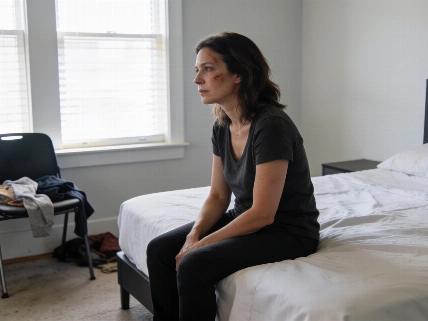

Teens often feel stuck between guilt and anger when a younger sibling constantly irritates them. Here’s why this happens and how to stop it before it hurts your relationship.
It can start with a door creaking open or a laugh from the next room. Suddenly, your nerves are shot. You snap at your little sister just for being there. The guilt comes right after the anger. You know she isn’t doing anything wrong, but you can’t seem to stop. For a lot of teens, this isn’t just a bad mood. It’s a daily loop of irritation and regret that leaves both siblings feeling alone and misunderstood.
Why does it feel like your younger sibling is invading your space just by being around? There’s no single answer. When you’re a teenager, your own space starts to matter more than ever. At 14, privacy and having control over your own room or time isn’t just a want—it’s something you need to grow up. If your little sister, only a few years younger, wanders in, it can feel like she’s crossing a line, even if she doesn’t mean to. Geopop.it points out that fights with younger siblings aren’t about “bad character.” They’re part of the normal push for independence, as teens crave more privacy and stronger boundaries.
Researchers distinguish between privacy and secrecy: wanting to be alone or closing your door is considered normal for teens, while hiding important facts out of fear of punishment is a different phenomenon.
Hormones make things even messier. The teenage brain is full of shifting chemicals. Emotions run high, and small things can set you off. What used to be a small annoyance can now spark a big fight. This pattern leaves both siblings hurt and confused. The older one often feels both ashamed and protective once things calm down. Neuroscience research shows the prefrontal cortex—the part of the brain that helps you control impulses and plan ahead—grows slower than the emotional parts. That’s why teens are more likely to snap over little things, as explained by PapZen.
But it’s not just about biology. Family life adds more pressure. Sometimes the younger kid gets more attention, or just seems to be everywhere. The older sibling can feel pushed aside or even jealous, even if they love their sister. The younger one might just want to hang out, not realizing she’s stepping into a minefield. Psytheater.com says these patterns are common when siblings are close in age, and learning to handle them is part of growing up. A review on Geopop.it also notes that most fights between parents and teens are about daily stuff, not deep values. These arguments peak around age 16, then slowly fade.
So what actually helps? First, know that feeling annoyed isn’t a sign you’re a bad person. It’s a signal. Instead of yelling or holding it in, pause and figure out what’s really bugging you. Is it her voice, her timing, or just that you can’t get a break? Naming the problem helps you respond instead of just reacting. If you need space, say it straight but kindly: “I need some time to myself right now.” Then take a break, even if it’s just a few minutes with headphones on in your room.
The UK government regularly publishes dedicated reports on the mental health and wellbeing of young people, providing important context for understanding adolescent emotional challenges, even though specific data on sibling conflict may not be included.
Setting boundaries doesn’t mean shutting your sister out. Try picking a time to hang out—when you choose. If you spend 15 or 30 minutes together, you give her the attention she wants without losing your own space. This also helps her see that your need for alone time isn’t about rejecting her. It’s just part of growing up.
Parents can help, but only if you tell them what you need. Don’t blame your sister. Instead, explain that you need more privacy or downtime. Ask for help making house rules that respect everyone’s space. Even a small change, like knocking before coming in, can help a lot.
You’re not alone in this. These sibling fights are a lot like the boundary-setting struggles in other relationships. Earlier reporting shows young adults face the same issues with parents. The skills you build now—naming your feelings, setting limits, making up after a fight—will help you everywhere, not just at home.
Feeling guilty after a blowup isn’t weakness. It means you care. You want things to get better, even if you don’t know how yet. The real work is in using that empathy: pause before you snap, reach out after a fight, and remember you’re both still learning. The discomfort means you care enough to want change. With practice, the cycle of irritation and guilt can shift into a more honest, stronger bond—one that respects your need for space and your connection as siblings.
Sibling relationships are where you learn emotional skills. The push and pull, the fights and the making up, all teach you things you’ll use long after childhood. Learning to set boundaries without shutting down, and to reconnect after a fight, sets you up for healthy relationships as an adult—at home, at work, and everywhere else.