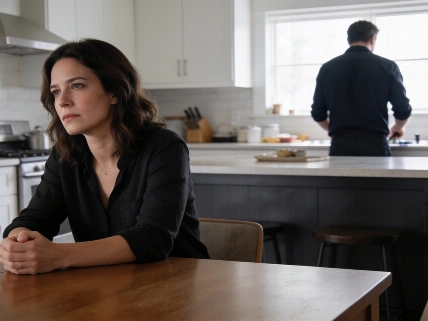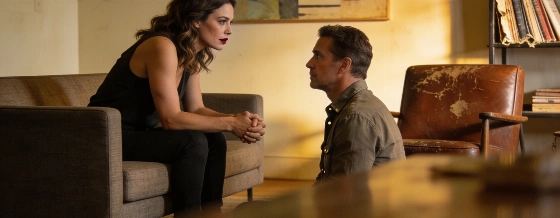
A woman faces emotional attacks and neglect from her husband who spends nights gaming and refuses to help at home while blaming her for their lack of children
He blamed her for not getting pregnant, then disappeared for two weeks. The silence was heavier than any argument. For six years, Emily tried to keep her marriage afloat, but now she wonders if love is supposed to feel like walking on broken glass.
Physical fights, sharp words, and a husband who vanishes into video games until morning—these aren’t just rough patches. They’re signs that the relationship has moved beyond ordinary conflict. When someone uses your deepest fears against you, the hurt goes far beyond chores or daily stress.
A 2017 study in the Journal of Psychosomatic Obstetrics & Gynecology found that among couples undergoing infertility treatment, partner-blaming was linked to significantly lower relationship satisfaction.
Emily’s story isn’t rare. Many women find themselves in relationships where their needs are brushed off as "too much," while their partners retreat into screens, hobbies, or silence. The pattern repeats: one person tries to save the relationship and burns out, then lashes out. The other withdraws, avoids, or fights back with words meant to hurt. Each round leaves deeper scars.
Hidden traps
What’s really going on underneath? Experts in transactional analysis say couples often fall into fixed roles—one becomes the critic, the other the rebel. The more one partner pushes for change, the more the other digs in, sometimes by sabotaging any attempt at closeness. This isn’t just laziness or lack of love; it’s about old emotional survival tactics that started long before the marriage.
When a partner checks out—avoiding outings, ignoring chores, escaping into games—it’s rarely about the activity itself. It’s a silent protest, a way to feel in control when feeling criticized or not good enough. But when that protest turns into physical aggression or targeted humiliation, the relationship crosses a line. Safety and respect aren’t extras; they’re the basics. Without them, therapy and communication exercises don’t work.
According to the UK National Health Service, about 25% of infertility cases are classified as 'unexplained' after both partners are evaluated, highlighting that blaming one partner is often medically unfounded.
Blaming a partner for infertility, especially when health issues are involved, is emotional cruelty. It’s not a slip. It’s a deliberate hit to the most sensitive spot, meant to shift pain and responsibility away from the accuser. The silence that follows—days or weeks without contact—is another way to control, leaving the other person to carry guilt and longing alone.
What keeps us stuck
Why do so many stay? There’s rarely a simple answer. Emotional attachment doesn’t disappear when someone hurts us; sometimes it gets stronger, fueled by hope that the "good version" of the partner will come back. The highs and lows can become addictive, making the rare moments of peace feel more intense than any steady calm.
But the cost is high. Over time, constant tension wears down self-worth, drains energy, and warps reality. What once seemed unacceptable—shouting, insults, even violence—starts to feel normal. The mind adapts to survive, but the body keeps the score: anxiety, insomnia, and a sense of walking on eggshells become daily life.
If you see yourself in this pattern, the first step isn’t to fix the relationship but to get clear. Write down what the relationship gives you right now—warmth, connection, hope. Then list what it takes away—peace, safety, dignity. This isn’t about making a decision on the spot. It’s about seeing the whole picture, without minimizing pain or longing.
Breaking the cycle
It’s easy to believe that if you just try harder, love more, or wait longer, things will change. But real change only happens when both partners admit there’s a problem and take responsibility. No amount of patience or self-sacrifice can make up for a partner’s refusal to grow.
In the meantime, small acts of self-care matter. Let yourself grieve what’s been lost. Make space for anger, sadness, and confusion. Practice grounding—feel your feet on the floor, take slow breaths, notice what’s around you. These aren’t cures, but they help you stay steady when emotions run high.
For some, the hardest part is realizing that love and self-respect aren’t opposites. You can want closeness and still insist on safety. You can miss someone and still refuse to accept cruelty. The pain of leaving may fade; the pain of staying in a relationship that chips away at your sense of self often does not.
Stories like Emily’s echo those of others who have struggled with partners who withdraw, blame, or manipulate. As reported earlier, the emotional cost of staying in these dynamics can be deep, affecting not just the relationship but every part of a person’s life.
When a marriage turns into a battleground, the question isn’t whether you’re asking too much, but whether you’re asking for the basics: respect, safety, and the freedom to be yourself. Anything less isn’t partnership—it’s survival mode. The real work isn’t fixing someone else, but refusing to shrink yourself to fit inside their limits.
Transactional analysis offers a way to understand these patterns, but insight alone isn’t enough. The decision to stay or leave is deeply personal, shaped by history, hope, and fear. What matters most is remembering that your needs are valid, your pain is real, and your future doesn’t have to be defined by someone else’s refusal to change.
Transactional analysis is a therapeutic approach that looks at how people interact through roles learned in childhood—like Parent, Adult, and Child. By spotting these roles in daily life, people can break out of destructive cycles and build healthier ways of relating. While it’s not a cure-all, this framework can help people notice when they’re stuck in patterns that hurt their well-being and guide them toward more honest, respectful connections.