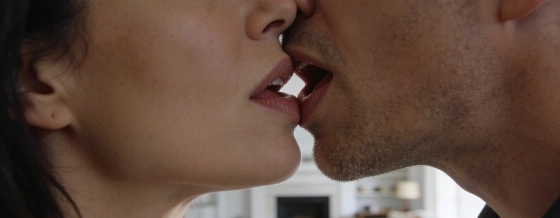
The way you kiss is more than a habit—it can signal how you handle intimacy, boundaries, and power in relationships. Three distinct kissing patterns often map directly onto psychological profiles.
The first kiss is rarely honest. Most people are performing, trying to impress or avoid awkwardness. By the third or fourth time, the act fades. Real habits show up—a quiet map of how each person handles closeness, control, and vulnerability. For couples, this is often when chemistry either deepens or quietly stalls.
In 2026, an Oxford University team received the Ig Nobel Prize for redefining the kiss as a 'non-agonistic interaction involving movement of lips or oral parts without food transfer,' offering a new scientific perspective on kissing.
On the other end is the partner whose tongue takes over—probing, exploring, sometimes overwhelming. This isn’t always aggression, but it is intense. These kissers often want fusion, hoping to blur the line between self and other. They tend to be impulsive, physically expressive, and crave touch. In relationships, they may be generous with affection but also prone to jealousy or possessiveness. If their style feels invasive, it can signal a need for reassurance or even a streak of narcissism—especially if they ignore your cues and keep pushing for more.
Then there’s the rare balanced kisser. Here, lips and tongue move together, shifting between gentle and passionate, reading the partner’s signals and adjusting in real time. This style is less about dominance or defense and more about connection. People who kiss this way tend to be flexible, empathetic, and emotionally mature. They can handle intimacy without losing themselves, and they value the process as much as the outcome. In therapy, this often lines up with secure attachment and a capacity for negotiation and mutual pleasure.
A 2026 Oxford study involving 902 participants aged 18–63 found that kissing serves as a valuable tool for assessing partner compatibility, with the first kiss often providing informal cues about the future of a relationship.
What’s most revealing is that mismatched kissing styles often become a flashpoint for deeper issues. The partner who feels smothered by too much tongue may start to dread intimacy. The one who wants more may feel rejected or starved. These small conflicts can spiral, feeding into bigger patterns of avoidance, anxiety, or resentment. And while it’s tempting to dismiss kissing as trivial, for many couples it’s a small act that exposes the real state of the relationship.
Reading these signals isn’t about pathologizing every kiss or turning affection into a test. But ignoring them is a mistake. The way we kiss is shaped by our attachment history, our comfort with our own bodies, and our willingness to risk being seen. When partners can talk openly about what feels good—and what doesn’t—they’re not just improving technique. They’re building trust, negotiating boundaries, and sometimes, saving the relationship from slow erosion. The most honest kiss is rarely the first. It’s the one that happens when nobody’s performing, and both people are finally willing to show up as themselves.
Attachment theory offers a useful lens for understanding these patterns. Securely attached adults tend to be more comfortable with both giving and receiving affection, while those with anxious or avoidant styles may struggle to find a rhythm that feels safe. Therapy can help couples decode these signals, moving beyond blame to curiosity and empathy. For anyone feeling stuck, exploring the roots of their kissing style can open the door to deeper intimacy—and a more honest connection.
Recent scientific publications note that kissing can express a range of emotions, including love, friendship, respect, loyalty, or submission. Unwanted kisses raise issues of consent and personal rights, as highlighted in a 2024 review on the complexity of kissing.
It’s also worth noting that while some popular psychology sources try to link kissing style directly to traits like control, attachment anxiety, or jealousy, current research does not support using kissing as a diagnostic tool for these psychological patterns. Instead, reliable studies, such as those from Oxford and Nature, frame kissing mainly as a way to assess partner compatibility and express emotion, not as a definitive marker of personality or attachment style.