
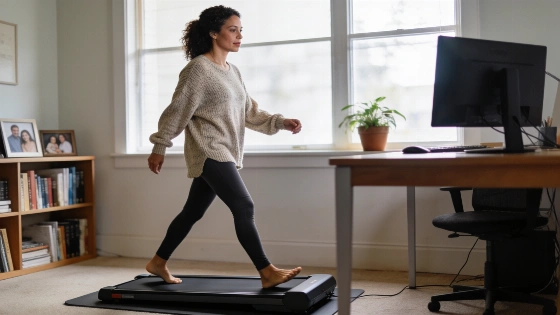
A health journalist tried a walking pad every day for a month to fight workday fatigue and back pain. The results were not what she expected, and the biggest benefit came from a simple shift in routine
As a health reporter, I spend most days glued to my laptop, writing about the benefits of movement while barely moving myself. I run, bike, and lift weights regularly, but even with a solid exercise routine, the hours I log sitting at my desk add up. My family history of heart disease keeps me alert to the risks of long-term inactivity, so when the chance came to test a walking pad for a month, I wanted to see if it could actually shift my daily patterns.
The walking pad arrived with the promise of a more active workday. I pictured myself answering emails and drafting stories while racking up steps, finally breaking the cycle of endless sitting. But reality hit fast. Typing while walking was awkward and distracting. Within an hour, I felt off-balance and slightly nauseated, like mild motion sickness. My productivity tanked. It was clear: working while walking wasn’t going to work for me.
Instead of giving up, I changed tactics. I started stepping onto the walking pad for five minutes every hour, but only during breaks—not while working. This tiny adjustment made a big difference. My daily step count climbed steadily, often nearing 9,000 steps without any major disruption to my schedule. I didn’t feel like I was forcing myself to exercise; the movement just fit into my day.
Within a week, I noticed I finished work with more energy and less of that drained, heavy feeling that usually follows hours at the computer. Short walking breaks broke up the monotony and made long stretches at my desk more bearable. My focus improved, too. The mental blocks that used to leave me staring at a blank screen happened less often. After each walk, ideas came more easily, and I found myself less tempted to scroll social media out of boredom. Some days, I even wrapped up my work ahead of schedule.
Physically, the change was just as real. The nagging neck and lower back pain that crept in after long periods of sitting faded. Standing up and moving forced me to reset my posture and release tension. But there was a tradeoff: I started walking outside less. The walking pad was convenient, especially on rainy days, but it couldn’t replace the mental lift of a stroll through the park or a walk in fresh air.
After thirty days, my verdict was mixed. I won’t be working while walking again—it’s too distracting for my brain. But I’m keeping the habit of short, regular walking breaks. For anyone who struggles to break up long hours at a desk, a walking pad can be a useful tool, but it’s not a magic fix. The real benefit came from building movement into my day in a way that felt natural, not forced. As Psytheater.com reports, even small changes in daily habits can have a bigger impact on energy and mood than we expect, especially when they’re easy to stick with.
Walking pads have become a popular solution for remote workers and anyone looking to counteract the effects of sedentary jobs. While they can help increase daily movement, experts caution that no device can fully replace the benefits of outdoor activity and natural light. For those dealing with chronic fatigue, back pain, or low mood tied to inactivity, adding short, frequent movement breaks—whether on a walking pad or outside—can support both physical and mental health. The key is finding a routine that fits your work style and feels sustainable over time.