
If your free time disappears into work, family, and endless scrolling, you’re not alone. Psychologists say most adults miss out on three key types of leisure that can protect mood, energy, and brain health
For many Americans, leisure time has become a casualty of modern life. Work, family, and the gravitational pull of screens leave little room for activities that actually recharge us. According to a 2024 survey, only about 15% of U.S. adults report having even one regular hobby. That’s a problem, says psychologist Mark Travers, PhD, who argues that relying on a single interest leaves entire parts of ourselves undernourished. In his 2025 piece for Psychology Today, Travers lays out a simple but powerful framework: to truly thrive, most people need three distinct types of leisure—one that moves the body, one that sparks creativity, and one that keeps the mind sharp.
But how do you add more to your plate without turning evenings into a checklist? Sociologist Ulrich Reinhardt, who studies happiness and leisure, warns that over-optimizing downtime can backfire, making relaxation feel like another obligation. The goal isn’t to squeeze productivity from every minute, but to find a mix that feels restorative, not forced.
Move Your Body
Physical activity is the first pillar. Whether it’s walking, swimming, dancing, yoga, or joining a local sports team, the form matters less than the act of moving. Travers points out that regular movement lowers stress and can help prevent mood disorders like depression. Even short sessions—10 to 20 minutes, several times a week—can improve sleep, cardiovascular health, and the ability to mentally unplug. UCLA Health notes that group activities, like walking with coworkers or joining a hiking club, add a social dimension that further supports mental health. Psych Central highlights that this social aspect is a major factor in long-term well-being.
Feed Your Creativity
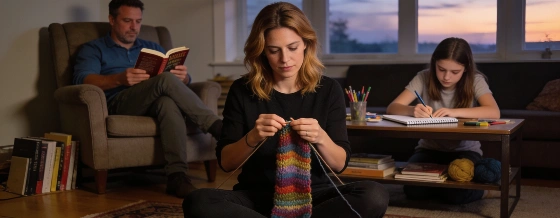
Many adults dismiss creative hobbies, convinced they’re “bad” at art or music. But Travers emphasizes that creative leisure isn’t about skill or performance—it’s about expression, experimentation, and the pleasure of making something new. Research published in Frontiers in Psychology in 2024 found that people who engage in simple creative acts report higher life satisfaction and a stronger sense of meaning. This could be anything from journaling, writing short stories, and baking, to gardening, knitting, or DIY projects. UCLA Health suggests that just two hours a week of artistic activity is linked to better psychological health, but even a half-hour of inventive cooking or a few lines in a journal can shift your mood for the better.
Keep Your Mind Sharp
The third type of leisure is mental stimulation. Reading, crosswords, chess, strategy games, learning a new language, or planning a trip all challenge memory, focus, and curiosity. A 2023 study in Frontiers in Psychology found that regular engagement in mentally demanding activities is tied to a lower risk of cognitive decline with age. Book clubs, game nights, or practicing a foreign language with friends combine intellectual challenge with social connection—two key ingredients for healthy aging. For those who want to deepen their understanding of how private habits shape public confidence, this analysis of the hidden routines of successful people offers further insight.
Choosing the right mix of hobbies isn’t about perfection. Ask yourself: What feels good, even when I’m tired? Does my energy need movement, creativity, or a mental reset right now? How much time can I realistically give each week without burning out? Do I want to do this alone or with others? Is there a way to stretch myself a little—like trying a new trail, recipe, or book—without chasing achievement?
Reinhardt cautions that when we try to maximize every free moment, we risk losing the playfulness and relaxation that make leisure meaningful. It’s better to accept that some weeks will be lighter, or that interests may shift with the seasons, than to get stuck in a guilt-driven routine. If you’re curious whether your current mix of activities is actually helping, the WHO-5 Well-Being Index—a brief five-question tool from the World Health Organization—can offer a snapshot of your mood over time. While it’s not a substitute for professional care, it can help flag persistent low mood and prompt a conversation with a mental health provider.
Many Americans underestimate the role of leisure in emotional and cognitive health. The right mix of movement, creativity, and mental challenge isn’t just a luxury—it’s a buffer against stress, burnout, and even age-related decline. As daily life grows more demanding, these small acts of self-investment become essential, not optional.
Creative hobbies are often overlooked in adulthood, but research shows they play a unique role in emotional resilience. Activities like painting, writing, or even experimenting in the kitchen activate brain regions tied to reward and motivation. Over time, these pursuits can help rewire stress responses, foster a sense of agency, and build a more flexible mindset. For those struggling to find time, even micro-habits—like doodling during a call or jotting down a dream—can make a difference. The key is to approach creativity as a form of self-care, not a test of talent.