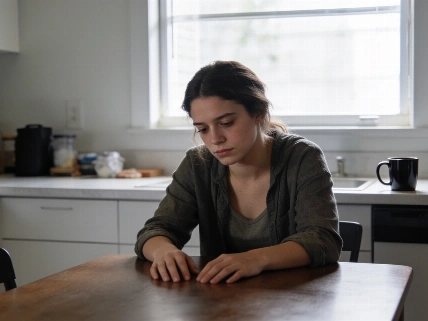

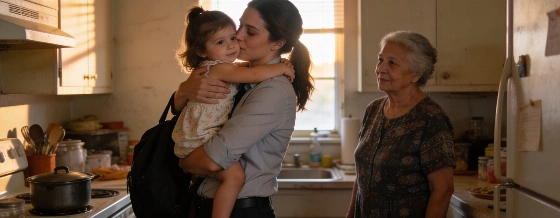
A woman faces the reality of living with her partner’s troubled daughter after abuse at her mother’s home and struggles to protect her own space while preserving her relationship
When your partner’s adult child moves in, everything changes. The home you built together suddenly feels less like yours. For many, this isn’t a hypothetical—it’s a daily challenge that tests patience, empathy, and the limits of personal boundaries.
Lisa, 50, had been in a long-term relationship when her partner’s 18-year-old daughter showed up after a violent incident with her mother. Lisa wasn’t consulted. She was expected to open her home, adjust her routines, and stretch her emotional reserves for a young woman she barely knew. The daughter, withdrawn and carrying her own trauma, made connection nearly impossible.
In England and Wales, courts can issue an occupation order under the Family Law Act 1996, determining who has the right to live in the family home and, if necessary, requiring one party to leave the property.
What followed wasn’t a story of instant bonding. Lisa found herself living with a teenager who barely spoke, neglected self-care, and spent most of her time online. Any gentle advice was met with silence or indifference. Her partner, often away for work, seemed to expect Lisa to step in as caretaker or even surrogate parent—without ever asking if she wanted that responsibility.
Lisa suggested a compromise: when her partner was away, she would stay with her own daughter and return only when he was home. He refused, insisting she remain in the house. The message was clear—she was to supervise his daughter, keep the household running, and maintain peace, even if it meant putting her own comfort aside.
Blended family fault lines
Blended families rarely come together smoothly. When adult children move in during a crisis, the emotional balance shifts. Legally an adult, the new arrival may still be emotionally vulnerable, socially isolated, and wary of authority. The partner left at home is pushed into a role with no clear script or support.
In the UK, the Children’s Wellbeing and Schools Act 2026 aims to strengthen support for care leavers transitioning to independent adulthood, highlighting the importance of enduring relationships and crisis accommodation for young adults.
Psytheater.com notes that these situations often reveal how fragile boundaries can be in non-traditional households. The partner who isn’t the biological parent may feel invisible, their needs pushed aside for the child or the biological parent’s guilt. Setting boundaries can be misread as coldness, fueling resentment all around.
Lisa’s story echoes a familiar pattern: when one person’s needs are always sacrificed, the relationship itself becomes fragile. Expecting a partner to absorb the fallout of past trauma, without discussion or support, leads to emotional exhaustion.
Who sets the rules
Clarity matters. If the biological parent expects their partner to supervise or mentor their adult child, that needs to be discussed and agreed upon. Without clear ground rules, the non-parent partner is left in limbo—not quite a parent, not fully independent. The adult child may not see the partner as an authority, which only adds to the instability at home.
Therapists who work with blended families stress the need for direct, honest communication. The biological parent should set household rules and back up their partner’s authority. If the adult child is living at home, she needs to understand that everyone has a say in how things work.
When these conversations don’t happen, the home becomes tense and divided. The partner may withdraw, emotionally or physically. The adult child may feel lost. The biological parent, caught in the middle, might avoid the issue and hope it resolves itself.
Choosing your line
There’s no single answer. Some partners try to build a relationship with the new arrival, hoping trust will grow. Others set firmer boundaries, insisting on their right to step back or even live elsewhere if things become unbearable. Both choices come with risks—conflict, distance, or the relationship itself wearing thin.
What matters is that the decision is made openly and respected. No one should be forced into a caregiving role they didn’t choose. No one’s home should become a place of constant discomfort. The biological parent’s responsibility is not just to their child, but also to the partner who shares their life and space.
Ignored boundaries breed resentment. When they’re respected, even imperfectly, the household has a chance to heal. The real work isn’t about pretending to be a perfect family, but about negotiating the messy, shifting lines of loyalty, care, and autonomy. The healthiest blended families aren’t free of conflict—they’re the ones where everyone’s needs are acknowledged, even when that means making hard choices.
Family boundaries change with circumstances, personalities, and the scars people bring. In blended households, the pressure to “just get along” can silence real needs and create quiet misery. The only way forward is through honest negotiation, not silent endurance. When partners ignore each other’s discomfort, they risk losing both their sense of home and the relationship itself.
Blended families face unique challenges around boundaries, authority, and emotional roles. Family therapy can help clarify expectations and improve communication, especially when adult children return home after trauma. Cognitive behavioral therapy (CBT) and psychodrama may help both parents and children build new patterns of trust and autonomy. The goal isn’t to erase conflict, but to make space for every voice—including the one that says, "I need something different."
In family law, a child arrangements order can set out who a child lives with and spends time with, providing a legal framework if disputes arise after an adult child moves back home, as explained in a Social Work World overview.