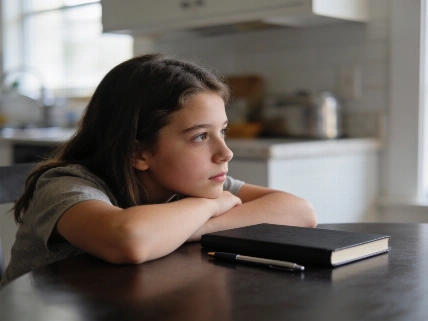

A young woman finds herself unable to tolerate her father’s presence as even his smallest habits spark overwhelming irritation. A cognitive behavioral therapist unpacks the roots of this reaction and what it reveals about family roles and emotional boundaries.
Sometimes, the irritation starts before a parent even says a word. The sound of a voice, a throat being cleared, the shuffle of feet—each small detail can feel like an attack. For some adults, being around a parent isn’t just uncomfortable; it’s almost unbearable. The anger and agitation can take over, hijacking family gatherings and leaving both sides hurt and confused. This isn’t a typical family argument or a passing mood. It’s a deep, ongoing reaction that can leave lasting marks.
What causes this kind of emotional intensity? Cognitive behavioral therapists say it’s rarely just a matter of clashing personalities. More often, it points to a breakdown in family roles and years of emotional weight that never got addressed. When a parent leans on their child for support—venting about daily problems or expecting help with things they could handle themselves—the child can end up acting as the caretaker, sometimes from a young age. Over time, this role reversal breeds resentment, especially if the parent’s neediness never changes.
Parentification can be both practical and emotional: a child may end up managing the feelings of a parent or sibling, not just household chores or caregiving tasks.
One 23-year-old woman describes feeling trapped at family dinners, unable to focus on anything but her father’s every move. His complaints about work, his habit of turning small setbacks into big stories, and his refusal to take initiative all trigger a wave of irritation that feels out of proportion. Even before he speaks, she braces herself for another round of emotional caretaking. The problem isn’t just the noise or the words—it’s the years spent absorbing someone else’s stress instead of being protected.
Therapists note that this dynamic isn’t just about being sensitive to certain sounds or quirks. It’s about boundaries that were never set, and roles that were never respected. When a parent always turns to their child for comfort or solutions, the child’s own need for support goes unmet. The result is a constant sense of exhaustion and a quick, intense reaction to even small reminders of that imbalance. As reported earlier, unresolved family roles can quietly undermine adult relationships and self-worth.
Therapist Saba Harouni Lurie describes parentification as what happens when a child is pushed into taking on the emotional or practical role of a parent—sometimes even caring for themselves, a parent, or a sibling. This can happen for many reasons: parental addiction, mental health struggles, divorce, financial stress, single parenthood, or when an adult hasn’t learned to manage their own emotions or seek help from other adults.
Widely repeated advice to wait 6–12 months before introducing children to a new partner after divorce is not supported by controlled studies, but rather stems from the practices of family mediators and lawyers, not scientific data.
But this isn’t just about blaming parents. Cognitive behavioral therapy offers practical ways to break the cycle. One is to hand responsibility back to the parent—refusing to step in as the fixer or emotional manager. That might mean saying, "I don’t know how to solve that, Dad—you’re the parent," and resisting the urge to rescue. Another is to look at whether the traits that bother us in others are ones we try to hide in ourselves. If a parent’s helplessness is unbearable, it might be because we’ve learned to deny our own vulnerability.
There’s also a physical side to these reactions. Chronic stress, poor sleep, and emotional fatigue can make us less tolerant of even minor annoyances. When the nervous system is already stretched thin, the brain treats familiar triggers as threats, making the urge to escape or lash out even stronger. This isn’t a personal failing—it’s a sign that both body and mind have been carrying too much for too long.
Family life is often more complicated than it looks on the surface. The urge to get away from a parent isn’t just about their habits—it’s about years of unmet needs, blurred boundaries, and the hidden cost of emotional parentification. The way forward is to reclaim the right to be a child, stop carrying what was never ours, and learn to accept the parts of ourselves we were taught to reject. Families don’t heal by ignoring these patterns. They heal when someone finally names the problem and chooses to do things differently.
Family roles and boundaries matter for emotional health, especially when old patterns linger into adulthood. Parentification—when a child is forced to take on adult responsibilities or emotional burdens—can shape self-esteem, relationships, and even physical health for years. Therapy can help untangle these roles, but the first step is seeing the cost of carrying what was never meant to be ours.