

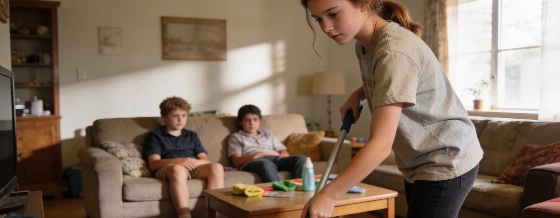
Older children often face stricter rules, more chores, and less warmth at home, while their younger siblings are treated with leniency. This pattern can fuel resentment, anxiety, and a sense of invisibility
In many American families, the oldest child is handed a heavier load—more chores, higher expectations, and a constant sense of being measured against their younger siblings. For some, this dynamic goes beyond the usual sibling rivalry and lands squarely in the territory of emotional neglect. According to Psytheater.com, the pattern is familiar: the youngest kids are doted on, while the eldest is left to shoulder blame and responsibility.
Take the case of Emily, 13, who describes feeling invisible at home. Her mother showers the younger children with attention, conversation, and praise, but Emily is noticed only when something goes wrong. If she slips up at school or misses a spot while cleaning, she’s met with hours-long lectures about her shortcomings. Meanwhile, her siblings are rarely held to the same standard. The message is clear: perfection is expected from the oldest, while the youngest are allowed to be children.
This double standard often extends to household duties. Emily is expected to keep the house spotless, sometimes being left behind while her mother and siblings attend events. She’s told to scrub every corner, with no time to rest until the job is done. The younger kids, by contrast, are rarely asked to help. The phrase “you’re a girl, so you should know better” is used to justify the imbalance, erasing any sense of fairness or personal boundaries.
Over time, this kind of treatment can erode a child’s self-worth. Emily reports frequent emotional breakdowns and nights spent crying herself to sleep. She’s learned that any mistake will be magnified, while her siblings’ errors are overlooked. The result is a chronic sense of injustice and isolation. Research from the American Psychological Association shows that children who are consistently scapegoated or compared unfavorably to siblings are at higher risk for anxiety, depression, and low self-esteem. These effects can persist into adulthood, shaping relationships and self-image for years to come.
Family therapists note that parents may unconsciously assign roles—like “the responsible one” or “the golden child”—based on birth order, temperament, or even their own unresolved issues. These roles can become rigid, making it hard for children to break free from expectations that don’t fit. In some cases, parents justify their behavior as preparing the oldest for adulthood, but the emotional cost is rarely acknowledged. For kids like Emily, the longing isn’t for special treatment, but for basic recognition and respect.
It’s not uncommon for parents to shift their approach after major life events or changes in family structure. Sometimes, as in Emily’s case, a parent’s experience abroad or a new focus on achievement can intensify the pressure on the oldest child. If you’re struggling with similar dynamics, it may help to read about others who have faced family patterns that leave them feeling trapped or unseen—such as the story of a young woman navigating family tension and loss in this recent feature.
Experts recommend that children in these situations try to identify small daily wins—moments when they did something well, even if it wasn’t perfect. This practice can help rebuild a sense of self-worth that isn’t tied to external approval. For parents, the challenge is to recognize when their expectations are uneven and to make space for each child’s individuality. Open conversations about fairness, boundaries, and emotional needs can help shift the family dynamic toward greater empathy and respect.
According to a 2023 report from the U.S. Department of Health and Human Services, nearly 1 in 5 American adolescents report feeling persistently sad or hopeless, with family stress and perceived favoritism among the top contributing factors. Early intervention—through counseling, school support, or family therapy—can reduce the risk of long-term emotional harm. Recognizing the signs of scapegoating and addressing them openly is a crucial step toward healthier family relationships.
Family roles and sibling dynamics are a major focus in child psychology. Researchers have found that the “scapegoat” role often emerges in families under chronic stress or where parents struggle with their own emotional regulation. Therapy approaches like family systems therapy and narrative therapy can help families identify and shift these patterns, giving each member a chance to be seen and valued on their own terms.