
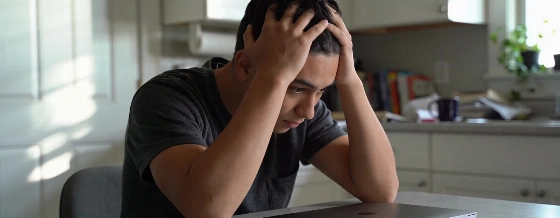
Many who leave behind a job they loved for a new country end up frozen by self-doubt, unable to get back into their field. Clinical experts explain why adapting can drain your confidence—and how to break out of the rut.
For many skilled immigrants, it’s not the language or the new streets that keep them on the sidelines. It’s the feeling that their old professional self is gone. They look in the mirror and see someone who doesn’t feel good enough to even apply for a job. The real problem isn’t just being out of work. It’s the slow loss of self-worth that comes from feeling invisible, as if everything you achieved before means nothing here.
One American woman thought moving abroad with her husband and young son would be a new beginning. She left a strong career in a big U.S. city. Three years later, after focusing on her child and volunteering in hospice and schools, she couldn’t get back into her field. Her English worked, but it wasn’t perfect. Every job ad seemed to ask for more than she could give. She felt frozen by fear of rejection, lost in her own profession, and fought daily with the idea that she no longer measured up.
In 2025, the employment rate among people aged 20–64 born outside the EU was 68.6%, compared to 77.2% for those born in their country of residence, highlighting an 8.6 percentage point gap.
This isn’t just about a paycheck. It’s about the split between who you were—confident, respected, in control—and who you feel you’ve become: unsure, alone, and out of step with your own goals. This isn’t just nostalgia. Psychologists call it identity disruption. It’s common among immigrants and trailing spouses who leave behind not just jobs, but the support and cultural signals that shaped their sense of self.
Clinical psychologist Dr. Laura Greer says adapting to a new country is a full-time job. You have to learn a new language, figure out daily life, and help your child adjust. That takes a lot out of you. Volunteering in tough places like hospice care isn’t just a way to fill time. It shows strength and empathy, but it also leaves little energy for reinventing yourself. Expecting to jump right back into a high-powered job isn’t just unrealistic. It sets you up for burnout and disappointment.
Finland recorded the largest employment gap between locals and people born outside the EU at 16.9 percentage points, followed by the Netherlands (16.1), Bulgaria (15.5), and Germany (15.0).
But the inner critic doesn’t let up. Looking at job boards turns into self-punishment. Every skill you don’t have feels like proof you’re not qualified. Even for entry-level jobs, the fear of being seen as an outsider—by language or by background—can stop you from applying at all. This creates a loop: you avoid applying, doubt yourself more, and sink deeper into despair.
To break this cycle, you need to change how you see yourself. Stop comparing yourself to your old life or to what you think employers want. Notice what you’ve really done. Adapting to a new country builds skills—flexibility, problem-solving, cross-cultural communication. These aren’t holes in your resume. They’re strengths. But you only see them when you stop chasing the perfect fit and start applying for jobs where you meet at least half the requirements. No one is a perfect candidate. The ones who get hired are the ones who show up and are willing to learn.
Job interviews aren’t final exams. They’re practice. Each one is a chance to work on your language, your story, and to learn about the market. They’re not do-or-die moments. Seeing them this way helps you take back control and break the grip of perfectionism. As reported earlier, even top performers can lose their footing when their identity and routine are shaken. Recovery starts with self-kindness and realistic goals.
People often forget that professional knowledge doesn’t just disappear after a few years away. The brain keeps those pathways ready. When the time is right, you can use both your old skills and the new ones you’ve gained from adapting. This can make you even stronger—if you give yourself time to recover from the stress of change. Pushing for instant results only makes things worse. The real work is learning to see yourself not as less, but as someone who’s already done the hardest part: surviving and adapting in a new world.
If you’re trying to get your career back after a big move, don’t chase lost status or try to erase every flaw. Respect the hidden work of adapting. Use your new strengths. Remember, taking imperfect action is better than waiting forever. The American idea of constant self-improvement can be toxic if it ignores what it costs to start over. Real resilience isn’t about never doubting yourself. It’s about moving forward anyway, even when you don’t know the way.
Adjustment disorder is a common but often misunderstood reaction to big life changes like moving, losing a job, or family upheaval. It’s not the same as depression or anxiety disorders. Adjustment disorder means you have emotional or behavioral symptoms within three months of a major stress, and these usually fade as you adapt. You might feel sad, hopeless, have trouble focusing, or pull away from things you used to do. Treatment often includes supportive therapy, cognitive strategies, and building new routines and social ties. Knowing the difference between short-term adjustment struggles and more serious mental health issues is key to getting the right help and avoiding needless self-blame.