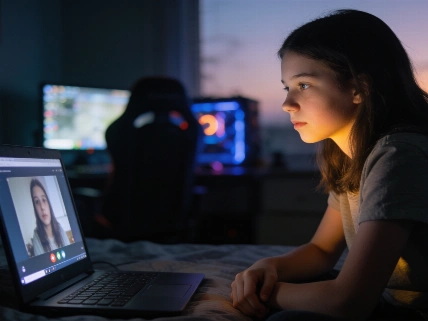

A teen struggles with overwhelming worry and worst-case scenarios after his mom leaves for work in another city, revealing how separation anxiety can trigger intrusive thoughts and emotional distress in children and adolescents
When someone you love is far away, your mind doesn’t always wait for logic. For some kids and teens, a parent’s absence can set off a rush of catastrophic thoughts—violent images, sudden panic, the sense that something terrible is about to happen. It’s more than just missing someone. It’s a fear that digs in and won’t let go, no matter how much you try to talk yourself out of it.
Separation anxiety in teens and older children can manifest not only as longing, but also as obsessive checking, physical symptoms before parting, avoidance of sleepovers and camps, and constant seeking of reassurance from parents.
Separation anxiety in older kids and teens is often brushed off as “just missing someone,” but it’s usually more complicated. The brain’s threat system, especially in kids who are sensitive or have experienced loss, can get stuck on worst-case scenarios. The urge to check, to seek reassurance, to mentally replay every possible danger—these are signs of anxiety, not intuition. As Emora Health notes, this cycle can feed on itself: the more you try to convince yourself everything is fine, the more your mind invents new “what ifs.”
Therapists who work with anxious kids often suggest a different approach: don’t argue with every scary thought. Instead, notice the feeling—“I’m scared for my mom”—and then gently return to whatever you were doing. The goal isn’t to erase the anxiety, but to get better at living with it. Crying, hugging a pillow, looking at photos—these aren’t signs you’re failing to cope. They’re part of learning to be more independent, even while you still need connection.
Recent recommendations emphasize that avoidance and excessive reassurance can reinforce anxiety, while gradual 'micro-separations' help teens build resilience to uncertainty. This is especially relevant at the start of the school year, when rituals of parting, transitional objects, and early involvement of school staff are advised if anxiety interferes with attendance.
It’s easy to mistake independence for emotional detachment. In reality, growing up means being able to love someone, miss them, and still function when they’re not there. That skill takes time to build, and setbacks are part of the process. If you’re struggling, it doesn’t mean you’re weak. It means you’re learning to carry love and fear at the same time, which is part of growing up. For those stuck in cycles of guilt or self-blame after a rupture in a close relationship, moving forward can be just as hard, as explored in this feature on repairing bonds after regret.
Newport Academy highlights strategies for managing separation anxiety: keep goodbyes short and predictable, gradually increase time apart, stick to a routine, practice breathing and mindfulness, and gently reduce the "reassurance loop." These steps help teens and parents avoid patterns that reinforce anxiety and instead support greater independence and emotional balance.
Separation anxiety isn’t just a childhood phase. For some, it lingers into adolescence and even adulthood, especially after stressful events or changes in family structure. The key isn’t to treat every worry as a problem, but to notice when anxiety is taking over—and to practice small, concrete steps toward resilience. Over time, the mind learns that missing someone doesn’t have to mean losing yourself.
Separation anxiety disorder is a recognized clinical condition that can affect children, teens, and adults. It’s marked by excessive fear or distress when away from loved ones, and can show up as nightmares, physical symptoms, or refusal to be alone. Cognitive behavioral therapy (CBT) and family-based interventions are among the most effective treatments. Building predictable routines, keeping communication open, and gradually increasing independence can help reduce symptoms and support healthy emotional development. Research highlighted by Peaceful Parent shows that the loss or absence of a parent is linked to higher risks of anxiety and depression in children, underlining the importance of early support and intervention.