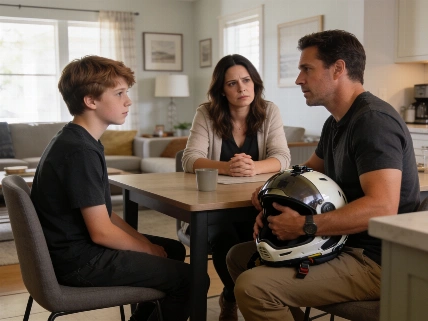

Doing too much for your child can undermine their confidence and resilience, warns psychiatrist Dr. Daniel Amen. Over-involved parenting may leave kids less able to handle setbacks and daily stress
Many American parents want to protect their children from discomfort, but new research suggests that doing too much for kids can actually make them less resilient. Psychiatrist Dr. Daniel Amen, author of Raising Mentally Strong Kids, argues that when parents constantly step in to solve problems or prevent failure, they unintentionally rob children of the chance to build real confidence and coping skills. According to Amen, children develop mental strength by facing challenges and learning to manage frustration, not by having every obstacle removed for them.
In his clinical work, Amen has seen the long-term effects of over-involved parenting. He describes families where forgotten homework is rushed to school by a parent, or where a child who refuses to wear a jacket is rescued from the cold. These small interventions, repeated over years, can send the message that children are not capable of handling life's basic demands. Instead, Amen recommends letting kids experience the natural consequences of their choices—within safe limits—so they learn responsibility and self-reliance.
When a child says, "I'm bored," Amen suggests resisting the urge to provide instant entertainment. Instead, he encourages parents to ask, "What are you going to do about it?" This approach helps children develop problem-solving skills and a sense of agency. The goal is not to punish mistakes, but to allow kids to encounter setbacks and recover, knowing their parents' support is steady regardless of outcome. As child psychologist Tovah Klein notes, the most effective message is: "I trust you to handle this, and I’m here for you no matter what."
Setting clear, consistent rules is another pillar of raising resilient children. Amen emphasizes that the brain needs boundaries to feel secure. He advises families to establish a handful of non-negotiable rules, such as telling the truth, treating others with respect, and following instructions the first time. These expectations should be discussed openly, so children understand what is required and why. Amen warns that repeating instructions multiple times teaches kids to ignore parents until frustration boils over. Instead, he recommends calmly explaining consequences and following through when rules are broken.
Responsibility should start early, Amen says. Even young children can be expected to clean up after themselves and contribute to household tasks. These routines build self-esteem and a sense of competence. He also advises parents to require children to ask permission before going out, reinforcing the importance of accountability and safety. While some kids may resist these checks, Amen notes that most ultimately feel more secure when parents are involved and attentive.
These patterns of over-involvement and boundary-setting are not unique to one family or culture. As Psytheater.com reports, adults who grew up with parents who micromanaged or failed to set limits often struggle with self-doubt and relationship challenges later in life. The effects of childhood dynamics can echo for decades, shaping how people handle stress, conflict, and independence.
According to the Centers for Disease Control and Prevention, about 1 in 5 children in the U.S. experience a mental, emotional, or behavioral disorder each year. While genetics and environment both play roles, parenting style is a significant factor in how children learn to cope with adversity. Studies published in the Journal of Child Psychology and Psychiatry have found that children who are encouraged to solve problems and manage setbacks on their own show higher levels of resilience and lower rates of anxiety and depression compared to those whose parents intervene at every turn.
Resilience is not a fixed trait but a set of skills that can be nurtured over time. Mental health professionals recommend that parents model calm problem-solving, allow children to experience manageable failures, and provide consistent emotional support. Building these habits early can help children grow into adults who are better equipped to handle life's inevitable challenges.
Parenting approaches have evolved over the decades, but the debate over how much to help versus when to step back remains central. Authoritative parenting—marked by warmth, clear expectations, and respect for a child's autonomy—has been linked to the best outcomes for mental health and social adjustment. In contrast, both overly permissive and overly controlling styles can undermine a child's ability to develop confidence and resilience. The challenge for parents is to find the balance that fosters growth without leaving children unprepared for the realities of adult life.