

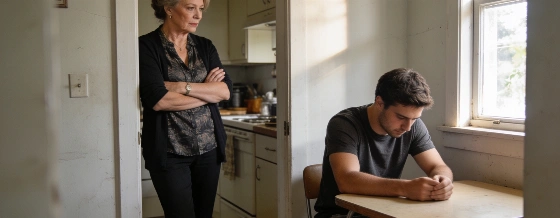
A mother struggles as her 33-year-old son lives at home, avoids work, and reacts with anger to any mention of employment. A psychologist explains the emotional patterns and what parents can do
My son is 33 and has been living with me for almost a month without a job. Every time I mention work, he either promises to change or lashes out. I’m exhausted and worried. What’s really going on?
It’s a scenario many parents face: an adult child, stuck at home, unable or unwilling to move forward. According to Psytheater.com, this pattern is rarely about laziness. More often, it’s a cycle of disappointment, shame, and fear. After a string of setbacks, some adults lose confidence in their ability to succeed. Each failed attempt at employment deepens the sense of defeat, making the next step feel riskier. When a parent brings up work, it can trigger a wave of shame and anxiety, which often comes out as anger or withdrawal.
For many, the idea of taking any job—warehouse, delivery, security—feels like proof of failure, not a step forward. The presence of a supportive parent can unintentionally enable this paralysis. If basic needs are met at home, the urgency to act fades. The adult child may not feel like a true adult at all, but more like a dependent, stuck in a holding pattern. This dynamic is especially common in families where love is expressed through caretaking, but it can quietly undermine growth.
Parents often feel guilty for setting boundaries, but protecting an adult child from consequences can delay their development. The most effective step is to calmly, but firmly, set a clear limit. For example: “I love you, but I can’t support you financially anymore. You have two months to find any job and start supporting yourself. If nothing changes, we’ll need to discuss next steps for you to live independently.” This isn’t cruelty—it’s a necessary handoff of responsibility. Expect pushback. Anger is a normal reaction when a long-standing system changes. The key is to hold your ground without escalating the conflict.
It’s also important for parents to reclaim their own lives. Chronic worry and self-sacrifice can become a way of life, but it’s not sustainable. Consider what your days would look like if your son moved out and your anxiety faded. Start building that life now—through friendships, hobbies, or even therapy for yourself. Your well-being is not a betrayal of your child; it’s a model of healthy adulthood.
Family patterns can be hard to break. Sometimes, as in cases where adult children compete for parental approval, old dynamics keep everyone stuck. Recognizing these patterns is the first step toward change. If you’re struggling to set boundaries, a family therapist can help you navigate the transition and manage the emotional fallout.
Recent data from the Pew Research Center shows that in 2023, nearly 18% of Americans ages 25 to 34 lived with their parents, a figure that has risen steadily over the past decade. Economic pressures, mental health struggles, and shifting social norms all play a role. But experts agree: while support is vital in crisis, long-term dependence can erode both self-esteem and family relationships. Setting limits is not just about finances—it’s about giving your adult child the chance to build resilience and autonomy.
Setting boundaries with adult children is a complex process that often brings up guilt, fear, and conflict. Family therapy can provide a neutral space to address these issues, helping both parents and adult children understand their roles and responsibilities. Therapists may use techniques like role-playing, communication exercises, and structured agreements to support healthier independence. The goal isn’t to sever ties, but to foster mutual respect and growth on both sides of the relationship.