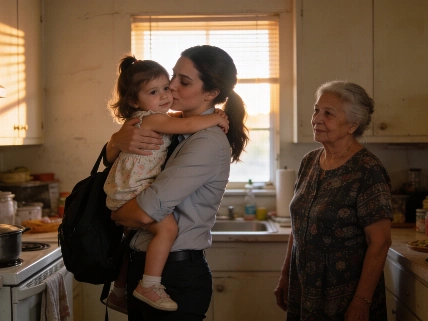
A mother of two considers college for the first time at 36, facing doubts about age, family pressure, and whether she can handle the demands of becoming a psychologist
At 36, Emily finds herself at a crossroads. She’s married, raising two kids, and has never finished college. After years of working, caring for her family, and weathering a marital crisis, she’s now considering a leap: enrolling in college to become a psychologist. The idea isn’t just about a new job. She wants to understand herself better, support her children’s emotional growth, and eventually help kids from troubled backgrounds work through trauma. But the doubts are loud. Is it too late? Will she manage the academic load, the emotional demands, and the skepticism from relatives who see her as someone who “never found her path”?
According to Psytheater.com, these fears are common among adults considering a career change, especially in fields like psychology that require both formal education and deep personal commitment. The profession demands more than a diploma. It calls for maturity, patience, and the ability to sit with discomfort—qualities that often grow with age. In fact, many experts argue that starting a psychology career in your thirties or forties can be an advantage. Life experience, resilience, and a grounded sense of self are assets in clinical work, not liabilities.
Still, the path is not easy. Emily will need to prepare for entrance exams, juggle coursework with family life, and invest years in training. The process typically involves earning a bachelor’s degree, then a master’s or doctorate, plus hundreds of hours of supervised practice. Financial and time commitments are real. Many programs require students to undergo their own therapy, learn evidence-based counseling methods, and work under supervision before seeing clients independently. The journey is long, but not impossible.
Experts recommend a clear-eyed approach. Before enrolling, Emily should map out her motivations and fears. A structured self-assessment—like a SWOT analysis—can clarify strengths, weaknesses, opportunities, and threats. Writing down specific worries (“I’m afraid I’ll fail the exams,” “My family won’t support me”) and answering targeted questions (“What do I hope to gain from this career?” “What’s the worst that could happen if I try and don’t succeed?”) can help separate real barriers from imagined ones. Sometimes, the urge to become a psychologist is rooted in a desire to heal personal wounds. In those cases, starting with personal therapy may be more helpful than immediately pursuing a new degree.
It’s also worth noting that career pivots in midlife are increasingly common. The American Psychological Association reports that nearly 20% of psychology graduate students are over 30, and many enter the field after raising families or working in unrelated jobs. The profession values lived experience. As one recent feature on midlife transitions noted, the sense of “starting over” at 40 or beyond is often less about failure and more about finally aligning work with personal meaning—see this perspective in navigating midlife doubts and career change.
For those considering this path, the key is to focus on the next step, not the entire journey. Circumstances change, and so do people’s needs and goals. No decision is truly final. The only way to know if you can handle the demands of a new profession is to start moving toward it, one concrete action at a time.
Becoming a licensed psychologist in the U.S. is a multi-stage process. According to the Bureau of Labor Statistics, the median pay for psychologists was $85,330 in 2022, with job growth projected at 6% through 2032. Most states require a doctoral degree for independent practice, but some counseling roles are open to those with a master’s. Accredited programs typically include coursework in ethics, assessment, and intervention, plus at least 1,500–2,000 hours of supervised clinical experience. The process can take 6–10 years from start to finish, but flexible and part-time options are increasingly available for adult learners balancing family and work.