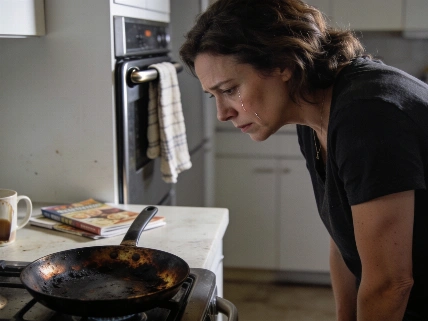

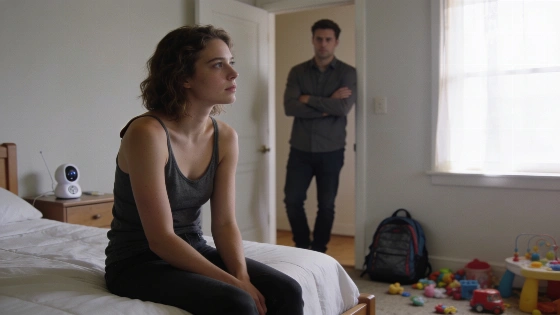
At 44, Olga is still recovering from a difficult pregnancy and emergency C-section. Her husband keeps pressing for a daughter, and a therapist explains how she can make her boundary clear.
The dispute has spread beyond the question of another child. Olga says her husband is jealous of her work, and she has thought about divorce.
She is 44 and has a six-year-old son. Her first pregnancy was very hard and ended in an emergency C-section. Olga says she has not recovered from the birth. Her husband continues to press for a daughter and, she says, has used deception in pursuit of that goal.
Psychologist and psychoanalyst Anna Simonova says the birth should not be treated as a medical event that is simply over. A difficult pregnancy and major surgery can affect both body and mind long after delivery. Olga’s fear of going through it again is not a whim, nor does she need to build a case for it.
Mayo Clinic describes C-section recovery as involving physical and emotional needs. It recommends contacting a health care professional within two to three weeks after birth, followed by a comprehensive postpartum visit at six to twelve weeks. Its C-section recovery guidance identifies anxiety as a concern to discuss with a clinician. Sleep problems and significant fatigue also warrant a conversation with a health care professional.
Simonova sees Olga’s sense that she has not recovered as a sign the birth may still be difficult for her to process. That does not establish a diagnosis. It does mean her refusal should be heard as a real response to what she experienced, not brushed off as an excuse. Mayo Clinic says short-lived postpartum sadness usually eases within two weeks. Persistent mood changes or difficulty caring for a baby warrant medical attention. That general timeframe does not diagnose Olga or explain her experience years later.
Simonova suggests her husband may be attached to an idea of fatherhood or an ideal family, rather than taking in the limits and needs of the person who would carry the pregnancy. His jealousy of Olga’s work may point to fear that she is moving beyond the role he expects her to fill. Those are possible readings, not established facts.
When one partner keeps arguing after the other has said no, the dispute is no longer only about family size. Olga says her account of her health and her wishes has not changed her husband’s demand. The reported deception makes the pressure especially serious.
The American College of Obstetricians and Gynecologists describes attempts to cause a pregnancy through pressure or persuasion as reproductive coercion. The definition also covers tampering with contraception, as discussed in a Dallas News investigation.
Olga’s work is part of her independent life, while her husband’s wish for a second child appears to pull her toward a role he has chosen for her. Simonova links his jealousy to possible anxiety about losing control. The concrete point is simpler: his distress does not give him the right to decide what happens to Olga’s body.
A similar strain around family pressure and personal limits appears in another family case. Here, the question is not how to persuade Olga to agree. She does not have to prove her reasons are good enough before her refusal counts.
Simonova advises Olga to choose a calm moment and speak from personal experience: her fear of the pain returning, and the feeling that she is depleted. That can make the impact clear without turning the conversation into a list of charges. Olga also does not have to keep defending a decision she has already made.
She can set a firm limit on conversations that bring blame or pressure, then ask her husband to join her in family therapy. A therapist may help them say what they want and hear each other. The sessions may also clarify what is driving his insistence. They cannot make a pregnancy something Olga owes him.
Simonova puts Olga’s physical and mental health ahead of saving the marriage at any cost. If her husband still will not hear her, Olga may have to make choices based on her safety and well-being. Couples therapy can give them a structured place to talk, but it works only if both can speak freely and take the other’s limits seriously. The couple remains in conflict, and Olga is asking how to make clear that she does not want another child.