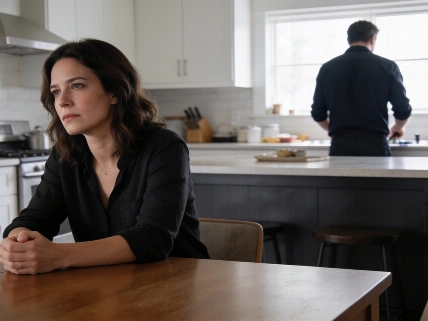

Cheating often masks a struggle to break free from parent-child dynamics in marriage, leading to emotional distance, low desire, and cycles of resentment that therapy can help untangle
Infidelity rarely happens in a vacuum. For many couples, cheating is less about desire and more about a desperate attempt to escape a relationship that feels suffocating or parental. When one partner unconsciously takes on the role of a parent—controlling, directing, or over-involved—the other may feel trapped in a childlike position, unable to assert independence or adult needs. Over time, this dynamic erodes sexual attraction and breeds resentment, as the forbidden territory of 'parent and child' relationships makes intimacy feel off-limits.
Consider the case of Mark, a 40-year-old father who sought therapy after years of growing distance from his wife. Married for over a decade, Mark described his home life as increasingly rigid. His wife set strict household rules—no eating after 8 p.m., mandatory Sunday visits to her mother, constant check-ins if he was running late. What began as comfort in her decisiveness soon felt like suffocation. Mark found himself rebelling in small ways: ignoring her texts, staying out late with friends, quietly undermining her requests. He felt stuck—resentful, immature, and sexually disengaged.
Mark’s story echoes a pattern seen in many marriages. When a spouse unconsciously seeks a parental figure—craving nurturing, protection, or direction—they may initially feel safe. But as the years pass, the lack of adult-to-adult connection stifles growth. Sexual desire fades, replaced by passive resistance or emotional withdrawal. The urge to break free can become overwhelming, and for some, that means seeking intimacy elsewhere.
When Mark began an affair, he felt a rush of adolescent freedom. With his new partner, he rediscovered simple pleasures—long walks, shared meals, laughter, and a sense of being seen as an equal. The contrast with his marriage was stark. Yet, as the affair progressed, the same controlling patterns emerged in the new relationship. His lover became demanding, suspicious, and critical, mirroring the very dynamics he was trying to escape at home.
Therapy helped Mark recognize the root of his dissatisfaction. He realized he had blurred the lines between his wife and his mother, expecting his spouse to fill emotional roles from childhood. Through counseling, he learned to separate these identities, reclaim his autonomy, and communicate his needs directly. As Mark changed, so did his marriage. His wife, who also began seeing a therapist, shifted from criticism to curiosity, from control to connection. Their intimacy improved—not just physically, but emotionally.
These patterns are not unique. As this analysis of hidden marital patterns shows, unresolved family dynamics often sabotage adult relationships. When partners unconsciously replay childhood roles, the relationship becomes a battleground for unmet needs and unspoken resentments. Breaking the cycle requires both partners to recognize their patterns, seek support, and risk new ways of relating.
According to Psytheater.com, the crisis of infidelity can become a turning point. Some couples use it as a wake-up call, confronting the emotional distance and renegotiating boundaries. Others find the rupture too deep to repair. But in either case, the lesson is clear: true separation from childhood roles is essential for adult intimacy. Therapy offers a structured space to untangle these knots, but the work is ongoing and often uncomfortable.
Recent research from the American Association for Marriage and Family Therapy indicates that about 15% of married women and 25% of married men in the U.S. report having had an extramarital affair at some point. Studies also show that couples who address underlying emotional patterns in therapy are significantly more likely to rebuild trust and satisfaction than those who focus only on the affair itself. These findings highlight the importance of looking beyond surface behaviors to the deeper relational scripts that drive them.
Family systems therapy is one approach that helps couples identify and change entrenched roles. By mapping out generational patterns and exploring how early family experiences shape adult expectations, therapists guide clients toward healthier boundaries and more authentic connection. This process can be challenging, but it offers a path to relationships built on mutual respect rather than unconscious repetition.