Speech delays in kids often reflect hidden family dynamics and parental patterns
Speech delays in children—whether labeled as apraxia, language delay, or broader communication disorders—rarely exist in a vacuum. For years, therapists focused on pregnancy, birth, and early childhood as the main windows for finding causes. But as clinical experience deepens, so does the understanding that a child’s struggle to speak can be rooted in family history, inherited patterns, and even the parent’s own subconscious responses.
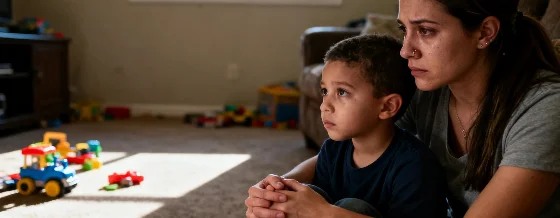
According to Psytheater.com, some therapists now work directly with the parent, often the mother, to access these deeper layers. In one case, a mother was guided to imagine herself as her child. This exercise, done in a safe therapeutic setting, revealed that the child’s reluctance to speak was not just a developmental hiccup. Instead, it traced back to a previous generation: the child’s soul, in this narrative, had once been a young man who stopped speaking to his father after a bitter argument. That silence became a lifelong pattern, and in the next generation, the child was born into a family where the father also refused to speak to his own father. The mother confirmed this was true in her family. The child’s silence, then, was not just his own—it was a reenactment of a family script.
Family systems therapy often uncovers these inherited prohibitions. In another example, a great-grandmother lived in a household where women were forbidden to speak in front of men or elders. She learned to be silent, compliant, and invisible, even when she disagreed. For some, this might have felt natural. For others, it bred resentment, fear, and a deep sense of injustice. Over time, the message—“Don’t speak, don’t express”—became a silent rule passed down through generations. The body remembers: chronic muscle tension, clenched jaws, a lump in the throat, even reduced hearing as a defense against constant criticism. Sometimes, the only outlet is an internal scream that never finds words.
Children living with these inherited patterns may react in opposite ways. Some become loud, restless, and defiant, always in motion, always making noise. Others withdraw, become tense, quiet, and hard to reach. Both are responses to the same unspoken family rule: it’s not safe to speak up. These patterns persist even when modern life no longer enforces such prohibitions. The subconscious mind, ever pragmatic, keeps what helped the family survive—even if it now causes harm.
Breaking the Cycle
Therapy sessions aimed at resolving these patterns focus on making the unconscious conscious. The work involves identifying the old rules, understanding their origins, and consciously choosing new ways to respond. Most of this work happens through the parent, especially the mother, but sometimes the father’s involvement is crucial. The goal is not to blame, but to break the cycle—so the child can develop speech and self-expression without inherited barriers.
Results can be striking. In the case described above, after several sessions, the mother returned with a new request—her son had started speaking. The change felt natural, almost unremarkable, but it marked a profound shift in the family dynamic. The therapist notes that every case is unique; not every child’s speech delay will have the same roots, and not every family will resonate with ideas like generational trauma or reincarnation. What matters is the willingness to explore the images, emotions, and patterns that emerge in therapy, and to focus on the real changes that follow.
What to Watch For
Parents may not believe in inherited family scripts or past lives, and that’s fine. The therapeutic process works with whatever images and emotions the subconscious provides. The key is to observe what changes in the parent, and then in the child. When a parent’s internal rules shift, children often follow suit—sometimes without anyone noticing the moment it happens.
Each story is different. The examples here are drawn from real practice, but they are not universal. Every child with a speech delay deserves an individual approach. The most important thing is to look beyond the surface, to be open to the possibility that what holds a child back may not be visible at first glance.
For families ready to explore these hidden dynamics, therapy offers a path—not a guarantee, but a chance to break old patterns and give children the freedom to find their own voice.
Speech-language pathologists and family therapists increasingly recognize the role of generational patterns in communication disorders. While not every case of speech delay is rooted in family history, research shows that children’s emotional and behavioral development is deeply influenced by parental attitudes, unspoken rules, and inherited coping mechanisms. Effective intervention often requires a holistic approach, combining direct work with the child and parallel support for parents. This dual focus can help families move beyond old scripts and foster healthier, more open communication for the next generation.