

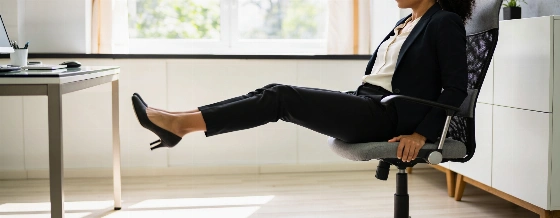
Long hours at your desk can weaken your core, but a few minutes of targeted chair-based moves can help strengthen abdominal muscles without leaving your workspace
Spending hours at a desk doesn’t have to mean letting your core muscles go slack. With the right approach, you can work your abs without ever leaving your chair—or even changing out of your work clothes. According to Fit for Fun, a German fitness magazine, a short series of chair-based exercises can activate your abdominal muscles and help counteract the effects of sedentary workdays.
The method is straightforward: use a stable chair (no wheels), clear a bit of space in front of you, and focus on posture. Sit at the edge of the seat, feet flat on the floor, spine tall, shoulders relaxed. Draw your belly in slightly to engage your core, and keep your lower back long but not overarched. Hands rest lightly on the sides of the chair for support, gaze forward, and breathe steadily. If you feel any sharp discomfort in your back or hips, stop immediately.
Proper breathing is key. Fitness coaches at Decathlon recommend exhaling during the effort—when lifting or extending your legs—and inhaling as you return to the starting position. Controlled movement matters more than speed. Rushing through reps or arching your back can lead to strain rather than strength.
Quick Core Routine
The full routine takes just 5 to 7 minutes. Perform each exercise for 30 seconds, cycle through all four, then rest for 30 to 60 seconds. Repeat the circuit three times. The four moves:
- Mini kicks: Sit at the edge, lean back slightly, extend your legs, and lift them a few inches off the floor. Alternate small upward kicks, as if pedaling in the air.
- Knees to chest, legs extended: With hands on the chair, pull your knees toward your chest, then extend your legs straight out without letting your feet touch the floor. Control the return.
- Oblique twists: Sit tall, lift your legs slightly, and bring your knees toward your left shoulder, then your right, alternating sides to target the obliques.
- Seated sit-ups: Lift both knees toward your chest, then lower them almost to the floor without touching down. This mimics a sit-up but is easier on the back.
These moves don’t just work the visible abs. They also engage the transverse abdominis—a deep muscle that acts like a natural corset—along with the obliques and rectus abdominis. Hip flexors get involved when you lift your knees, which can explain the burn in your upper thighs after a few rounds.
Progress and Caution
To make the routine harder, increase each set to 40 or 45 seconds, or add a resistance band around your ankles or ankle weights. Beginners can stick to two rounds, briefly touch their toes down between reps, and focus on maintaining control rather than speed. Never sacrifice form for more reps—arching your back or rushing can do more harm than good.
Chair-based core work is especially useful for people who spend most of their day sitting, whether at home or in an office. It’s a practical way to build strength without needing a gym or special equipment. As recent research on muscle strength and health outcomes suggests, even small increases in muscle activity can have a measurable impact on overall well-being.
According to Fit for Fun, these exercises can be slotted into a break between emails or meetings. The key is consistency—doing a few minutes daily is more effective than a long session once a week. If you have a history of back pain or other health concerns, check with a healthcare provider before starting any new exercise routine.
Core strength is about more than appearance. The abdominal muscles stabilize the trunk, support posture, and help prevent injury. Weakness in this area can contribute to back pain, poor balance, and reduced mobility. Regular core training, even in small doses, can improve function and comfort in daily life.
Data from the Centers for Disease Control and Prevention show that over 25% of American adults spend more than eight hours a day sitting. Prolonged sitting is linked to higher risks of chronic conditions, including heart disease and diabetes. Integrating short bouts of movement—like chair-based core exercises—can help offset some of these risks and support long-term health.