
Avoidance and fear of fear can lock panic in place and make each new episode feel worse
Why Panic Attacks Take Over Your Life and What Keeps the Fear Alive?
Avoidance and fear of fear can lock panic in place and make each new episode feel worse. But targeted strategies can help break the cycle.
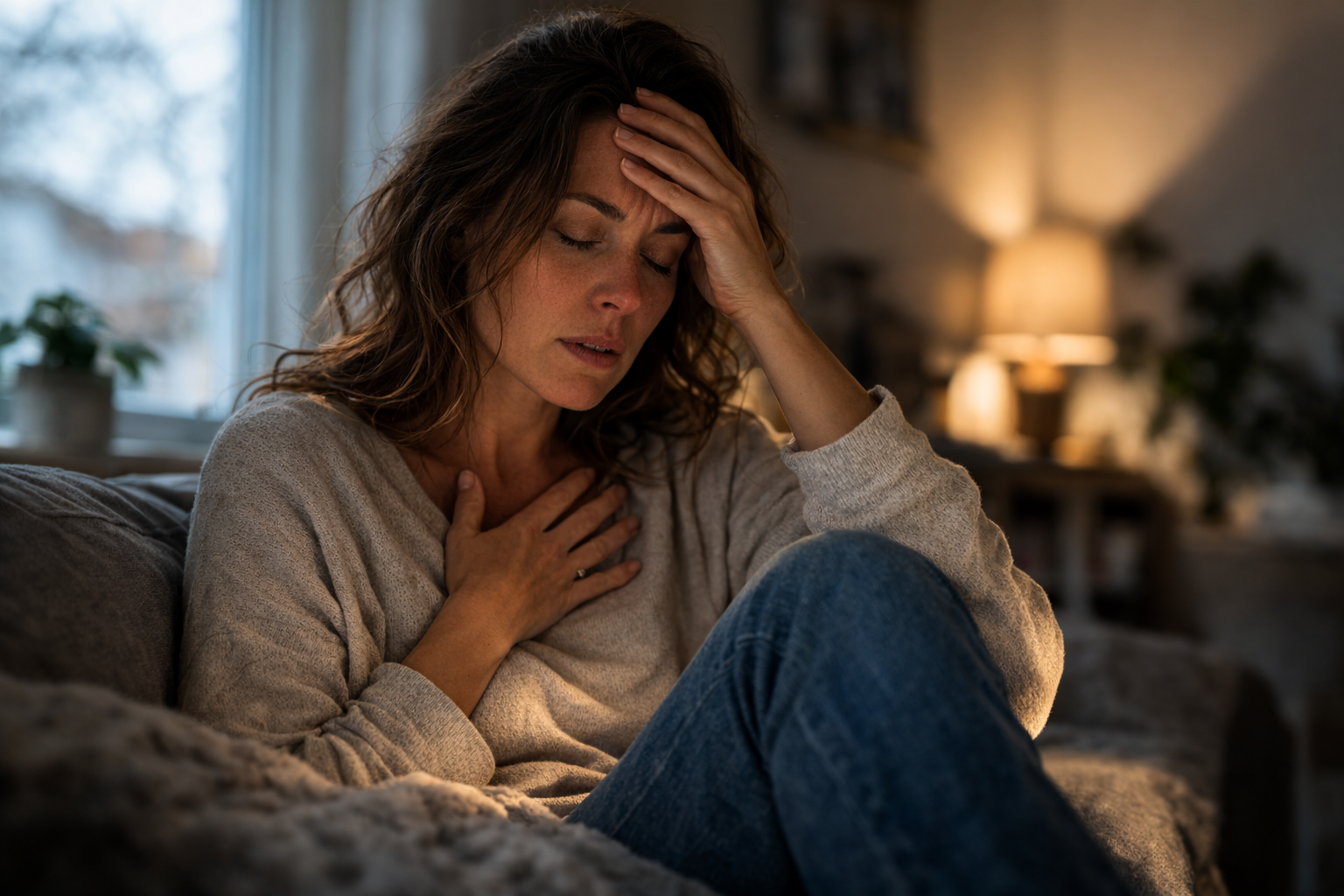
Most people with panic attacks put all their energy into stopping the episode as fast as they can. That impulse is easy to understand. But it often keeps the cycle going. The problem is not only the panic attack itself. It is the pattern around it: avoiding places linked to fear, checking the body for danger, and reading each surge of panic as proof that something is seriously wrong. This is where panic disorder often gains ground. A store, a highway exit, a subway car, or a crowded line may start to feel dangerous, even when there is no real threat. The mind ties that place to alarm. The person leaves, avoids it later, or begins planning life around it. Relief comes fast, but the brain reads that retreat as confirmation that the danger was real. That makes the fear more likely to return. For that reason, it makes little sense to frame recovery as a fight against the panic attack itself. Trying to overpower it often leaves a person drained without changing the pattern. The more useful focus is on the mechanisms that support panic: escape, overcontrol, and fear of the fear reaction. That does not make the deeper cause unimportant. Panic can be tied to chronic stress, loss, burnout, old trauma, health anxiety, or other forms of inner strain. Work with a therapist can help identify what is driving it in a given case. At the same time, insight alone is not enough. The nervous system also needs a new experience: direct contact with situations that feel dangerous, followed by the discovery that they are in fact safe. That shift begins when a person stops organizing life around avoidance. Not all at once, and not by force, but gradually. The task is to stay in contact with what triggers fear long enough for the alarm to rise and then ease. With repetition, the old link between that situation and danger weakens. The setting stops carrying the same charge. A second barrier is fear of fear itself. Many people are frightened not only by the symptoms but by the fact that the symptoms appeared at all. A racing heart, dizziness, shaking, heat, or short breath becomes frightening twice: first as a body reaction, then as a sign that something worse may follow. That second layer often strengthens the attack. This is why it matters to allow fear instead of treating it as forbidden. The turning point often comes when a person stops demanding total calm and starts making room for the fact that fear is present. That does not erase discomfort. It changes the meaning of it. Fear loses part of its force when it no longer controls the whole scene.