
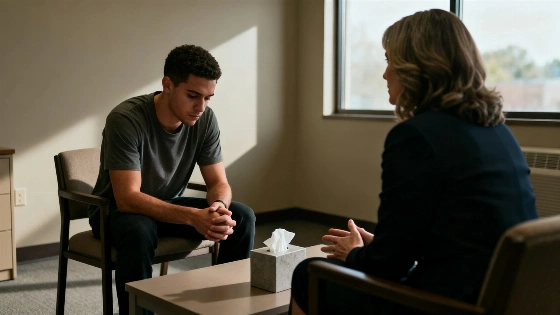
A young woman’s jealousy grows during a long hospital stay, even as her boyfriend stays loyal. A psychotherapist explains how separation can trigger irrational fears and what it takes to stop jealousy from wrecking a relationship.
Emily, 24, spends her days staring at the hospital ceiling. Two months in bed, and her mind refuses to rest. The medical fight is only half the story. Jealousy creeps in, sharper than any fever. Missed calls from her boyfriend sting. His weekend plans without her feel like threats. She tries to manage everything from her hospital room, but anxiety keeps tightening its grip.
Her boyfriend has never crossed a line. He skips clubs and avoids flirting. He shows up when she needs him. Still, Emily starts laying down rules: no barbecues if she can’t go, no outings with women around. She knows her own record isn’t spotless, but isolation makes her imagine betrayals that haven’t happened. The cycle is punishing—tears, panic, and the sense that she’s losing her grip on both her health and her relationship.
NHS mental health services recognize that physical illness and hospitalization can become a focus in couples therapy, alongside issues like loss, trauma, and changes in intimacy.
Why does jealousy flare up when the partner hasn’t done anything wrong? Clinical psychotherapist Dr. Laura Sorenson points to old wounds. Sometimes it’s past betrayals. Sometimes it’s the fear of being left behind when life feels shaky. Emily’s hospital stay has stripped away her sense of control. She can’t join in daily life, so her mind fills the gap with worst-case scenarios. Trying to control her boyfriend’s actions is her way of clawing back some power.
But every new rule risks driving him further away. Dr. Sorenson says unchecked jealousy can turn into a self-fulfilling prophecy. Constant suspicion and restrictions breed resentment. The relationship shifts from closeness to surveillance. In some cases, as reported earlier, control can push even loyal partners to the edge.
Emily’s struggle isn’t rare. Illness or forced distance often brings out irrational fears. People start believing that monitoring or restricting a partner will keep them safe. It’s a false sense of security. Real trust doesn’t come from control. Dr. Sorenson urges people to look at what’s fueling the anxiety. Which past experiences are feeding these fears? Is there a hidden belief that love must be guarded at all times?
NHS psychiatric services highlight that experiences of loss, separation, violence, illness, and trauma are often linked to later difficulties in relationships and self-esteem. Approaches such as mentalization-based therapy and analytic psychotherapy are among the methods used to address these complex emotional needs.
Professional help can break the cycle. Therapy gives people a place to unpack old pain and challenge distorted thinking. The goal isn’t to blame yourself for jealousy, but to understand its roots and find better ways to cope. Sometimes, the hardest question is whether the relationship itself is right, or if jealousy signals a deeper mismatch.
When illness or distance exposes cracks, clamping down on a partner won’t fix them. The only way forward is to get honest about needs and boundaries. The strongest couples don’t survive by policing each other. They face discomfort and work through it. Emily’s story shows how unchecked jealousy can wreck even solid bonds. The last word belongs to the facts: therapy and self-reflection offer a way out for those willing to do the work.