
Many Americans treat hobbies as optional, but research and lived experience suggest that making time for real leisure activities can reduce stress, boost confidence, and help fight social isolation
When Marina Cooley, a marketing professor at Emory University, moved to Denmark to teach a course on happiness, she expected to find cultural quirks. What she didn’t expect was to see adults everywhere—cycling, sewing, baking, building, playing—treating hobbies as essential, not extra. In Denmark, one of the world’s happiest countries, the pattern was clear: people fiercely protect time for their own interests, no matter how busy life gets. According to Top Santé, this simple but radical approach changed Cooley’s outlook—and her life—when she brought it back to the U.S.
Back home, Cooley decided to test the Danish model for herself. Over the next year, she tried 17 different hobbies, from baking and cold plunges to painting, tennis, and woodworking. She didn’t aim for mastery. Instead, she wanted to see how regular, chosen leisure would affect her stress, mood, and sense of self. The result? She felt stronger, braver, and more confident—despite a packed schedule as a working mom. The experiment forced her to rethink what counts as self-care and how Americans often confuse productivity with well-being.
Rethinking Leisure
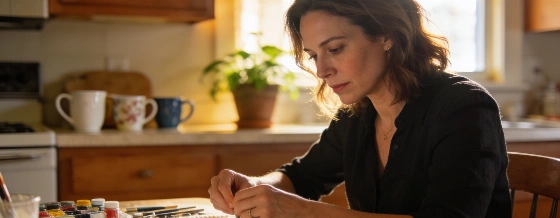
Cooley’s experiment wasn’t about quantity. She defined a hobby as any regular, unpaid activity done for pleasure, not performance or utility. The key was making real space for it—blocking time in her calendar as deliberately as any work meeting. In Denmark, she noticed, people plan their leisure with the same seriousness as their jobs. The activity itself could be simple: knitting, gardening, or even collage. What mattered was the commitment to doing it, not the skill level or outcome.
She quickly noticed six major effects. First, her endless, anxious scrolling on her phone dropped off. When your hands are busy kneading dough or gripping a climbing wall, you can’t doomscroll. Second, she found hidden pockets of time by swapping out TV or late-night work for focused, hands-on activities. Third, she learned to shelve some hobbies for later—woodworking, for example, didn’t fit with young kids at home, but she kept it on her list for the future.
Social and Emotional Impact
Not every hobby felt the same. Cooking dinner was still a chore, but baking became a calming ritual. She shifted her self-care habits, trading beauty appointments for time spent on activities she actually enjoyed. Hobbies also chipped away at loneliness. Through tennis, climbing, and horseback riding, she found new communities—groups of women, many with young kids, who still made time to play together. Conversations grew deeper, too, as people opened up about what truly interested them.
Cooley observed that in a country facing what she called an epidemic of loneliness, people with active hobbies seemed more protected. The act of carving out time for yourself—outside of work, parenting, or partnership—helped her reclaim a personal identity. It also set boundaries, making it easier to say no to overwork and yes to what actually mattered. This echoes research on confidence-building strategies, such as the use of alter egos in high-pressure moments, as explored in this analysis of psychological tools for overcoming self-doubt.
Making It Work in Real Life
To make the Danish approach accessible, Cooley suggests a simple rule: aim for one hobby for your mind, one for creativity, and one for movement. For her, that meant mahjong for mental challenge, DIY projects for hands-on creativity, and tennis for physical activity. But she’s clear—there’s no need to start with all three. Even 20 minutes, twice a week, replacing screen time with a hobby you actually want to try, can make a difference.
She also cautions that hobbies should remain enjoyable and safe. Any new physical activity—like climbing or tennis—should be eased into, especially for those with health concerns. Cold plunges, popular in Denmark, require extra care. The real point is to find a gap in your schedule, pick something that feels good, and accept that some interests may have to wait. When her seven-year-old son told her, “I have so many hobbies,” she realized the impact had already spread to her family.
Recent data from the American Time Use Survey shows that U.S. adults spend less than 20 minutes a day on leisure activities that aren’t passive, like watching TV. In contrast, countries with higher happiness scores, such as Denmark and the Netherlands, report much higher rates of active hobby participation. Studies published in the Journal of Positive Psychology have linked regular engagement in chosen leisure activities to lower rates of depression and improved social connection, especially among women and parents balancing work and family demands.
Hobbies are more than a way to pass time. They can be a buffer against stress, a tool for building confidence, and a path out of isolation. For many, the hardest part is giving themselves permission to start—and to treat their own interests as non-negotiable, not optional.
Many therapists and mental health professionals now encourage clients to identify and protect time for hobbies as part of a broader self-care plan. Unlike passive entertainment, active hobbies engage the brain and body, foster social ties, and help people rediscover parts of themselves that get lost in the grind of daily life. For those struggling with burnout, loneliness, or low self-esteem, even a small step toward a chosen activity can mark the beginning of real change.