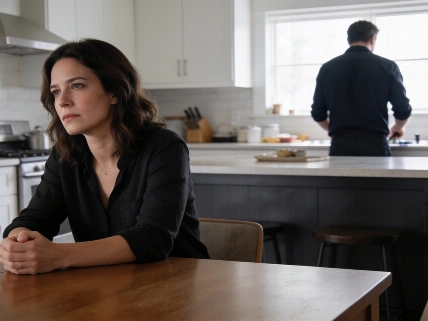
Intense maternal focus can reshape family dynamics and trigger hidden generational patterns
Motherhood doesn’t just change a woman’s schedule—it rewires her brain. The “maternal dominant mode,” as described by experts, is a powerful biological shift that kicks in after childbirth. Suddenly, a woman’s attention narrows to her newborn with laser-like intensity. This isn’t a personality change or a character flaw. It’s a deep, evolutionary adaptation designed to keep a helpless infant alive. For months, sometimes longer, a mother’s senses become hyper-attuned to her baby’s needs, often before a single cry. She may feel as if she’s lost control of her old self, but in reality, she’s gained a new level of empathy and connection that’s impossible to access any other way.
Yet this transformation can be jarring—not just for the mother, but for everyone around her. Partners often feel pushed aside, invisible in the new mother-baby orbit. Even the most involved fathers can’t break into the primal “mother-child dyad” that forms in the early months. According to Psytheater.com, this isn’t rejection or lack of love. It’s a temporary, biologically driven state. The challenge is that the old couple dynamic—two adults, partners first—no longer fits. The family system is forced to adapt, and not every relationship survives the strain.
Some women find the maternal dominant mode doesn’t “switch on” as expected. This can be due to hormonal issues, trauma, or other factors. But for most, the shift is profound and all-consuming. The pressure to multitask, to be the same partner, friend, or professional as before, becomes impossible. Accepting this new focus—and letting go of guilt for not being “your old self”—is crucial. So is learning to trust a partner as an ally, not a rival. Many mothers struggle to accept help, fearing judgment or feeling they must do it all alone. But the ability to communicate needs, accept support, and see a partner as a source of safety can make this period less isolating.
Family Upheaval
The arrival of a baby is not just an addition—it’s a rupture. The old system, with its familiar roles and routines, collapses. Couples often blame each other: He’s checked out, she’s cold, he’s always at work, she’s always angry. But beneath the surface, the family is a living system under stress. When a third person enters, the balance shifts. Old bonds weaken, new ones form. If the family lacks flexibility or resources, the easiest path may be separation. This isn’t always a failure. Sometimes, it’s the only way for individuals to survive overwhelming tension.
Generational patterns—what psychologists call “family scripts”—often surface during this crisis. Each partner brings a legacy: beliefs about what it means to be a mother, a father, a spouse. For men, it might be “real dads provide, not nurture,” or “men should endure in silence.” For women, it could be “a good mother sacrifices everything,” or “divorce is shameful.” These scripts activate automatically under stress, shaping behavior in ways that feel inevitable. A man may withdraw, not from lack of love, but because avoidance is the only model he knows. A woman may refuse help, convinced she must carry the load alone. When these inherited beliefs collide with the reality of sleepless nights and emotional chaos, conflict is almost guaranteed.
Hidden Scripts
Many couples underestimate the power of these generational scripts. They’re not just ideas—they’re emotional reflexes, passed down through families, often unexamined. When a new baby arrives, these patterns can take over. One partner may retreat into work, the other into resentment or martyrdom. The result is often a standoff, with each person feeling misunderstood and alone. In some cases, the only way the system can adapt is by breaking apart. The pain is real, but it’s not always about personal failure. Sometimes, the old relationship model simply can’t survive the new reality, and the family splits so that its members can find stability on their own terms.
Understanding these dynamics doesn’t make the process easier, but it can reduce shame and blame. Recognizing that the maternal dominant mode is a normal, even necessary, part of early motherhood can help couples weather the storm. So can acknowledging the invisible scripts that shape our reactions. With time, the intensity fades, and new patterns can emerge—sometimes together, sometimes apart.
Family therapists often work with couples to identify and challenge these inherited scripts. By making the unconscious conscious, partners can choose new ways of relating, rather than repeating old cycles. Therapy may focus on communication, boundary-setting, and building trust in the new family structure. The goal isn’t to restore the old normal, but to help each person—and the family as a whole—adapt to a changed landscape.